
To adapt a wind-down routine when you share a bedroom, keep your personal settling-down activities outside the room when they would disturb someone, then agree on light, sound, and entry habits inside it. Your shared-bedroom wind-down routine in 2026 does not need matching bedtimes; it needs a workable handoff between people with different evenings. Leave room to revise the agreement when work, caregiving, or personal preferences change.
- For a wind down routine shared bedroom plan, agree on light, sound, and entry habits rather than matching bedtimes.
- Move activities that disturb your roommate or partner outside the bedroom when practical.
- Keep shared sound optional; one person's calming audio can interrupt another person's quiet.
- Restweft offers personal sleep coaching for adults who want guidance with doable routines and ongoing check-ins.
How do you adapt a wind-down routine when you share a bedroom?
Separate what helps you unwind from what must happen in the bedroom. Reading, preparing tomorrow's belongings, or listening to something quietly does not have to happen beside a person who is already trying to sleep. Keep the bedroom portion simple enough that entering later does not restart the whole evening.
If your evening already feels crowded, start with a wind-down routine for a busy evening, then adjust the parts that affect the person sharing your room. You are adapting an existing evening, not adding a second job.
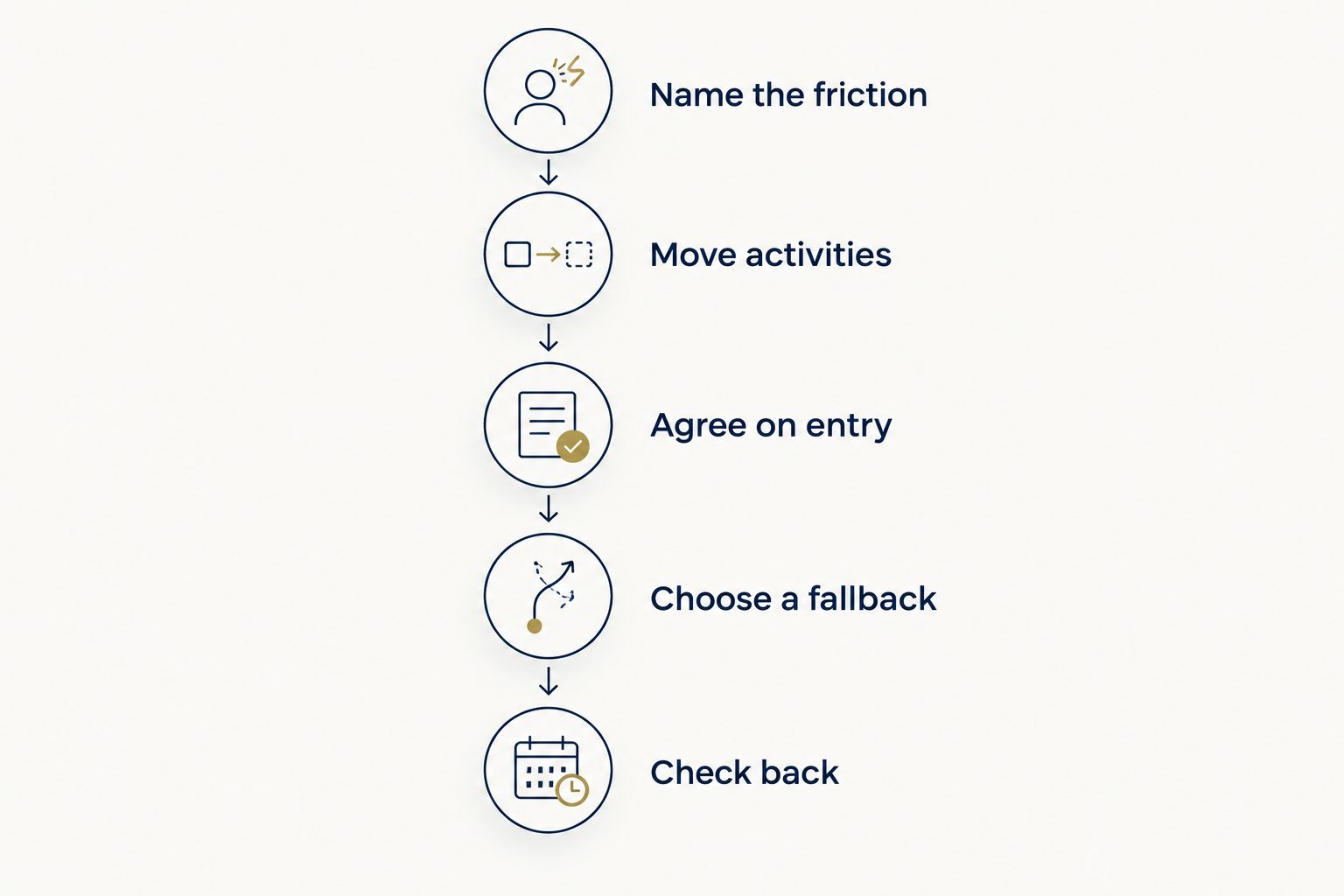
- Name the actual friction. Describe the lamp, conversation, alarm, or repeated entry that interrupts settling down, rather than calling someone a bad sleeper or an inconsiderate roommate.
- Keep personal activities personal. Place activities with light, sound, or movement elsewhere when practical.
- Agree on a bedroom handoff. Decide what changes once someone is ready to sleep and what the later arrival needs ready beforehand.
- Choose a smaller fallback. Make room for evenings when the usual plan does not fit.
- Check back together. Keep what works and change the part that creates friction.
Use this as your 2026 starting plan, not a permanent agreement. A useful arrangement gives both people a say without requiring identical routines.
Why this matters
Sharing a bedroom creates shared decisions, but it does not make your preferences identical. One person might enjoy reading while the other wants darkness; one might come home late while the other starts work early.
Trying to solve every difference with a synchronized bedtime puts the focus on the clock instead of the interruption. Start with what each person can hear, see, or feel in the room. That gives you something specific to discuss and change.
The aim is not a perfectly silent evening or a routine nobody ever breaks. It is an arrangement you can return to without blame after an ordinary, messy day.
Build a shared routine without matching bedtimes
Name the friction
Have the conversation when neither person is trying to fall asleep. Explain what happens and what you need: the overhead light comes on while you are settling, or tomorrow's clothes get searched for after you have gone to bed.
Ask the other person what they need, too. Someone arriving late still needs to get changed and move safely through the room; an agreement that ignores those needs is not workable.
Keep the discussion tied to behavior rather than motive. Saying that a particular sound interrupts your quiet gives you a problem to solve together; saying someone does not care turns the discussion into a judgment.
Move activities
List the parts of your evening that do not require the bed. Packing a bag, choosing clothes, finishing messages, and listening to audio are possible candidates for another space.
You do not need a dedicated relaxation room. Use an available chair or shared living area when it is practical, and avoid creating another conflict with someone who uses that space.
If the bedroom is your only private space, focus on reducing the disturbance rather than removing the activity. Agree on where you can sit, what light you can use, and when conversation pauses.
Agree on entry
Walk through the later person's arrival in plain terms. Think about belongings, clothing, doors, light, and anything that would otherwise require searching around the room.
Prepare what you can before the earlier person settles. Keep the route through the room clear, and agree on enough light for safe movement rather than expecting someone to move in complete darkness.
Choose a fallback
Decide what remains on an unusually late or tiring evening. You might leave tomorrow's belongings ready, finish essential personal tasks, and enter the bedroom with as little disruption as practical.
The fallback is not a punishment or a failed version of the full routine. It is the version that fits when you have less time or energy.
Check back
Ask what felt easier and what still got in the way. Keep the conversation narrow enough that you can act on it: change the lamp arrangement before rebuilding the entire evening.
You do not have to assess each other's sleep or prove who had the harder night. Review the shared arrangement, not the other person's performance.
Adapt the plan to the evening you actually have
When you go to bed at different times
Agree on a quieter bedroom period rather than a shared bedtime. The earlier sleeper can settle while the later person finishes activities elsewhere, then enters with essentials already prepared.
The advantage is that neither person has to adopt the other's whole schedule. The limitation is that the later arrival still involves some movement, so discuss which interruptions matter most instead of promising none.
For example, reading in another room might be manageable, while brushing teeth elsewhere is not. Distinguish flexible activities from tasks that depend on your home's layout.
When you share a small room
Use location as well as timing. A chair, desk, or side of the room can become the place for quiet personal activities, provided the arrangement works for both occupants.
This keeps the plan usable without an extra room. It also has limits: a shared room does not offer complete separation, and a light or sound near one person can still reach the other.
Do not buy equipment before agreeing on the problem. First decide whether you need less light, less conversation, fewer repeated entries, or somewhere to put belongings.
When evening conversation matters to you
Keep connection in the routine, but give it a place that does not depend on someone staying awake in bed. You might talk while clearing up or before the earlier person begins settling.
The benefit is keeping time together without making bedtime the only opening for a meaningful conversation. The trade-off is that you need another opportunity, especially when evening schedules barely overlap.
If a difficult topic comes up late, agree on when to return to it. Do not use a wind-down agreement to dismiss a concern that needs attention.
Why a shared-bedroom wind-down routine varies
There is no single arrangement that fits every household. These factors change which adjustments are practical:
- Different schedules: Work and caregiving affect who enters the room later and what they still need to do.
- Light preferences: Reading and getting ready can conflict with someone else's preference for darkness.
- Sound preferences: Audio that one person enjoys is still shared sound unless both people agree to it.
- Available space: An extra room offers options that a single-room home does not.
- Evening responsibilities: Essential tasks need a place in the plan, not a rule that assumes they disappear.
- Personal boundaries: Shared notes, conversations, and routines should not require sharing information someone wants to keep private.
Choose the factor causing the clearest conflict first. You can leave the rest alone until there is a reason to adjust it.
What kind of support fits a shared-bedroom routine?
When comparing support in 2026, ask whether you need a place to record patterns, help choosing an adjustment, or a conversation about making the routine fit. These are different needs, and adding another tool does not settle a household disagreement by itself.
| Approach | Best for | Useful role | Limitation |
|---|---|---|---|
| Self-guided routine | Adults who want to begin with their own observations | Lets you choose and revise everyday habits yourself | You supply the structure and follow-through |
| Sleep app | Adults who prefer a digital place for notes or prompts | Can organize the information or reminders its features support | Features vary; an app cannot agree on bedroom boundaries for you |
| Restweft personal sleep coaching | Adults who want personal guidance and ongoing check-ins | Supports practical evening routines and attention to sleep patterns | It is everyday wellness coaching, not medical care, and does not replace a household conversation |
Restweft is best for adults who want personal online sleep coaching to build a doable evening routine with ongoing check-ins. Coaching can focus on your own choices, but your partner or roommate still needs a voice in decisions affecting the shared room.
If that support fits, you can create an account and complete a private sleep profile. Start with the evening you actually have, including the parts you cannot easily change.
What if my partner wants background sound and I want quiet?
Treat background sound as a shared-room decision, not an automatic part of bedtime. Explain whether your difficulty is the type of sound, its presence, or when it starts and stops.
Consider keeping personal listening outside the bedroom when preferences conflict. If you try shared audio, agree that either person can ask to revisit the arrangement without having to defend their preference.
What if our agreement works only on some nights?
Keep the parts that work and identify what is different on the difficult nights. A late shift, an unfinished task, or a changed caregiving responsibility calls for a practical adjustment, not a judgment about commitment.
Write down the fallback if remembering it creates more discussion. A short agreement is enough; you do not need a household rulebook.
How can I track patterns without monitoring my roommate?
Record your own experience and the conditions you noticed, not a score for the other person's behavior. For your 2026 sleep notes, useful details include what you did before bed, whether the room arrangement felt workable, and what you want to adjust.
Keep shared observations separate from private notes. Only share what you choose, and avoid treating a diary entry as proof that someone else caused a difficult night.
FAQ
Do we need the same bedtime for a shared-bedroom routine?
No, a shared-bedroom routine does not require the same bedtime. Agree on light, sound, and entry habits so each person can keep an individual evening routine.
What can I do if there is nowhere else to wind down?
Use the available space and agree on activities that fit the room. Discuss where you sit, what light you use, and which sounds are acceptable rather than assuming complete separation is possible.
Should we use sleep sounds if only one of us likes them?
Shared sleep sounds need agreement from both people. When preferences conflict, consider keeping personal listening outside the bedroom rather than making one person's preference the room's default.
What should I do when I get home after my partner is asleep?
Prepare the belongings you need before your partner settles whenever practical. Agree on safe lighting and a simple entry routine so you do not need to search around the bedroom.
Can I work on my routine if my roommate does not want to participate?
Yes, you can adjust your own evening activities without requiring your roommate to follow a routine. Decisions that affect shared light, sound, or access still need a respectful conversation.
Can Restweft help me adapt my evening routine?
Restweft offers personal online sleep coaching for practical evening routines, sleep-pattern tracking, and ongoing check-ins. It is everyday wellness coaching, not medical care, and cannot replace an agreement with the person sharing your bedroom.
When should I ask a healthcare professional about sleep difficulties?
Speak with a qualified healthcare professional about persistent sleep difficulties, breathing concerns during sleep, or sleepiness that affects safety. A wind-down routine and wellness coaching do not diagnose or treat medical conditions.
One last thing
Choose a courtesy you can repeat, not a rule you have to enforce. Preparing your clothes before someone settles or moving a conversation out of the bedroom gives the agreement a concrete action.
Keep your 2026 routine open to revision. Making room for better nights is a rhythm, not a reset button, and the shared part works best when both people can say what needs to change.