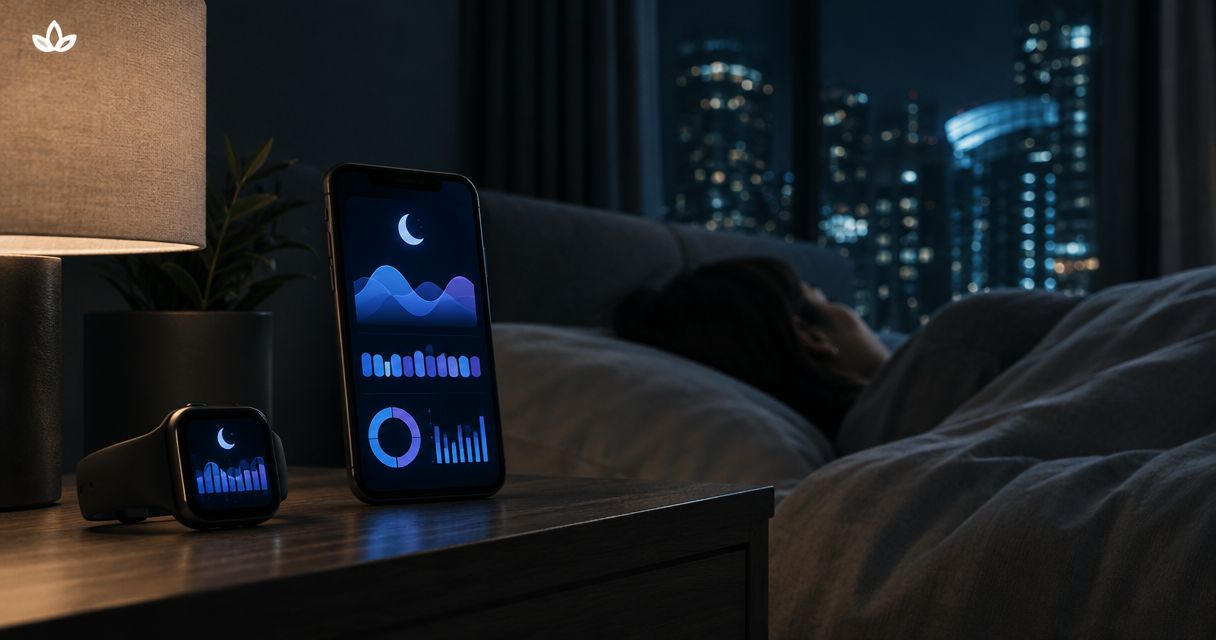
Best ring option: Oura Ring. Best for iPhone users who prefer a watch: Apple Watch. Best for an existing Fitbit user: Fitbit. This 2026 guide to the best sleep trackers ranked by accuracy separates useful sleep estimates from claims a consumer tracker cannot establish; no universal accuracy winner is established here.
- For best sleep trackers ranked by accuracy, compare validated measurements—not sleep scores or feature counts.
- Oura Ring suits ring wearers; Apple Watch suits iPhone users; Fitbit suits people already using Fitbit.
- Consumer sleep trackers estimate sleep; clinical polysomnography measures signals used to assess sleep stages.
- Restweft personal sleep coaching helps adults connect sleep patterns with manageable evening routines, not medical treatment.
A tracker can give you something to discuss, but it cannot decide what your evenings should look like. Restweft offers personal online sleep coaching built around practical routines, sleep-pattern tracking, and ongoing check-ins.
Why this matters
An accuracy ranking sounds straightforward until you ask: accurate at measuring what? Bedtime, total sleep, nighttime awakenings, and sleep stages are different measurements, and a device does not earn equal confidence across all of them.
Consumer trackers estimate sleep from signals such as movement and, depending on the device, heart-related measurements. Clinical polysomnography records additional signals, including brain activity, that support sleep-stage assessment. A detailed graph is not the same thing as a clinical measurement.
The American Academy of Sleep Medicine's position statement on consumer sleep technology distinguishes consumer tracking from medical evaluation. That distinction guides this 2026 comparison: use a tracker to notice patterns, not to diagnose a condition or overrule how you feel.
What makes the best sleep tracker for accuracy?
Look for these criteria before choosing a device:
- Measurement-specific evidence: Evidence about total sleep time does not automatically establish accurate sleep-stage estimates.
- A relevant reference: Validation against polysomnography answers a different question from agreement with another consumer tracker.
- The exact device and software: Research on a different model or algorithm does not establish the performance of the version you are considering.
- A relevant study population: Results from one group do not automatically apply to every age, health situation, or sleep pattern.
- Consistent, comfortable use: A tracker you remove overnight cannot provide a complete record of that night.
- An understandable next step: The information should help you reflect on your routine rather than leave you chasing a score.
The best accuracy claim names the measurement, reference method, device version, and people studied. A broad statement that a tracker is accurate leaves those questions unanswered.
Sleep trackers at a glance
The order below follows distinct use cases, not a proven laboratory accuracy ranking. No percentages or head-to-head accuracy scores are assigned because those require comparable, model-specific evidence.
| Option | Best for | Standout feature | Key limitation |
|---|---|---|---|
| Oura Ring | Adults who prefer a ring to a wrist device | Ring-based sleep tracking | Fit and comfort matter; sleep stages remain estimates |
| Apple Watch | iPhone users who want watch-based tracking | Sleep tracking within a watch and phone setup | Requires a compatible iPhone setup and an overnight charging plan |
| Fitbit | Adults already comfortable with Fitbit | Sleep tracking within the Fitbit app experience | Features vary by model; the brand name alone does not establish accuracy |
For your 2026 shortlist, choose the format you can wear comfortably, then examine evidence for the exact model. Do not turn this table's order into an accuracy score it does not contain.
1. Oura Ring: best sleep tracker for ring-based tracking
Oura Ring is a finger-worn tracker that provides sleep estimates through its app. It belongs on your shortlist if you want overnight tracking without wearing a watch.
The useful distinction is its format, not a claim that a ring always measures sleep more accurately than a wrist device. Fit, overnight comfort, and the evidence for the particular generation all deserve attention.
Oura Ring pros:
- Offers a ring format for people who dislike sleeping in a watch.
- Provides sleep information without requiring a wrist device.
- Supports reviewing patterns across nights rather than relying on memory alone.
Oura Ring cons:
- A ring is not comfortable or practical for everyone.
- Sleep-stage labels are estimates, not direct measurements of brain activity.
- Findings about another generation do not establish the accuracy of the model you choose.
Best for: Adults who prefer a ring and want to review sleep patterns without wearing a watch.
Before choosing Oura Ring, ask which measurement matters to you. If you mainly want to observe bedtime patterns, that is a different decision from wanting precise information about deep sleep.
Verdict: Buy for the ring format; skip it if your main reason is an unverified claim of unmatched sleep-stage accuracy.
2. Apple Watch: best sleep tracker for iPhone users
Apple Watch provides sleep tracking within Apple's watch and iPhone setup. It suits you if a watch already fits your day and you want to include overnight tracking in that arrangement.
Wrist comfort and charging are practical parts of the decision. A device that is charging instead of being worn cannot record that night's sleep through its sensors.
Apple Watch pros:
- Combines sleep tracking with a watch you can use during the day.
- Keeps sleep information within an existing Apple setup.
- Avoids introducing a ring if you prefer a wrist-worn device.
Apple Watch cons:
- Requires a compatible iPhone setup.
- Overnight use requires planning when to charge it.
- Wearing a watch in bed does not suit every sleeper.
Best for: iPhone users who prefer a watch and can make overnight wear comfortable.
Check compatibility and sleep features for the exact watch model and software. The Apple Watch name covers different hardware, so avoid treating every version as one identical measurement device.
Verdict: Buy for an existing iPhone-and-watch routine; skip it if wrist comfort or charging would interrupt regular use.
3. Fitbit: best sleep tracker for existing Fitbit users
Fitbit offers sleep tracking on supported wrist-worn devices. It is a practical option to assess first if you already use a Fitbit and understand its app.
Familiarity does not prove accuracy, but it removes a separate learning decision. Before replacing a working tracker, identify the particular measurement or usability problem you need another device to solve.
Fitbit pros:
- Lets existing users review sleep within a familiar app.
- Offers wrist-based tracking without changing to a ring.
- Provides a place to look back at sleep patterns across nights.
Fitbit cons:
- Sleep features differ between devices.
- Wrist wear can be uncomfortable overnight.
- A Fitbit sleep score does not establish medical sleep quality or a diagnosis.
Best for: Adults who already use Fitbit and want to make better use of their sleep records.
Check the features and validation evidence for your exact device. A review of a different Fitbit model does not settle whether replacing yours would improve the measurement you care about.
Verdict: Hold onto a comfortable, useful Fitbit; wait before replacing it solely for a different sleep score.
How this 2026 ranking works
This guide ranks suitability by device format, existing setup, and practical overnight use. It does not claim independent testing or assign a numerical accuracy order without comparable evidence.
The criteria above also explain why a long feature list does not decide the winner. For an accuracy comparison, look for the same reference method, comparable participants, and results for the measurement you actually want.
When reading a validation study, distinguish average results from individual nights. Agreement across a study group does not promise that every estimate on your dashboard is correct.
Turn tracking into a doable evening routine
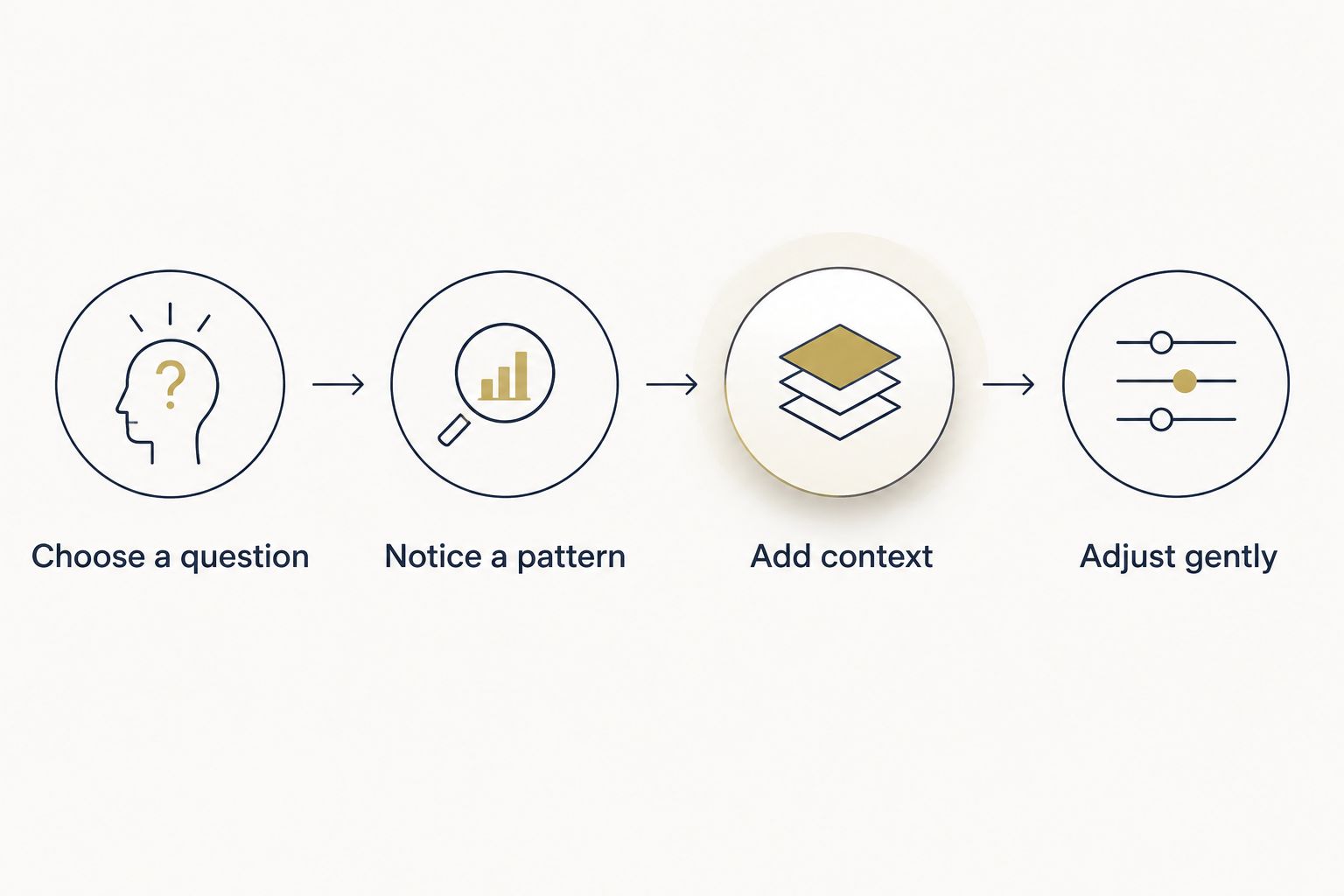
A useful tracking routine connects an observation with something you can adjust. Try this sequence without turning it into another demanding bedtime task.
Choose a question
Pick a question that relates to your life: does finishing work late coincide with a later bedtime, or do evenings with fewer unfinished tasks feel easier? Keep it narrower than improving every sleep metric.
Notice a pattern
As a manageable starting exercise, review 7 nights rather than reacting to a single score. That is an observation window, not a deadline for improvement or a clinical assessment period.
Add context
Spend 1 minute recording something a tracker cannot explain, such as an unusually late meeting or feeling rested despite a disappointing score. A sleep journal template can give those notes a consistent home.
Adjust gently
Try setting aside 10 minutes for one manageable evening activity, such as preparing tomorrow's bag. Treat that duration as an example, not a required dose or a promise of better sleep.
If an evening runs late, adapt the activity rather than trying to complete a missed routine perfectly. The aim is a rhythm, not a reset button.
When personal guidance helps more than another tracker
Restweft personal sleep coaching is best for adults who want help turning sleep patterns into doable evening routines. Personal guidance and ongoing check-ins serve a different purpose from a device's overnight estimates.
| Approach | Best for | Useful contribution | Limitation |
|---|---|---|---|
| Sleep tracker | Observing estimated sleep patterns | Records information across nights | Cannot explain every cause or diagnose a condition |
| Self-guided journal | Connecting evenings with your own experience | Captures context and how you feel | Depends on what you remember and record |
| Restweft personal sleep coaching | Adapting routines with personal guidance | Supports practical adjustments and ongoing check-ins | Everyday wellness coaching, not medical care |
A self-guided routine gives you independence, but you supply the reflection and follow-through. Coaching adds personal guidance; it does not turn consumer measurements into medical findings or guarantee results.
If that support fits what you need, you can create an account and complete a private sleep profile. There is no need to arrive with perfect records or a finished routine.
Make room for better nights
Create an account and complete a private sleep profile to begin with your real-life routine.
Which sleep tracker should you choose in 2026?
Start with a tracker you already own if it is comfortable and answers your question. Choose Oura Ring for the ring format, Apple Watch for an iPhone-based watch routine, or Fitbit when an existing Fitbit setup serves you well.
If accuracy is the deciding factor, pause until you can find relevant evidence for the exact models and measurements. A clear limitation is more useful than a confident ranking built from unrelated studies.
Restweft can help you connect everyday observations with sustainable adjustments. Persistent sleep concerns, breathing concerns during sleep, or daytime sleepiness that affects safety belong with a qualified healthcare professional, not a consumer-score comparison.
FAQ
What's the most accurate sleep tracker in 2026?
This guide does not identify a universal accuracy winner. Accuracy depends on the measurement, exact device and software, reference method, and people studied; a use-case ranking is not a laboratory accuracy ranking.
Is Oura Ring more accurate than Apple Watch?
A blanket accuracy comparison is not established here. Compare studies of the specific generations and the same outcome, such as total sleep time, rather than treating every sleep metric as interchangeable.
Can Fitbit tell me exactly how much deep sleep I got?
Fitbit provides an estimate of deep sleep, not a direct measurement of brain activity. Use stage estimates as consumer information rather than medical findings.
Should I replace my tracker if another device gives a better sleep score?
A different score alone is not a sound reason to replace a tracker. Scores from different systems do not provide a shared clinical scale, so identify the measurement or practical problem you want to improve first.
Can I understand my sleep without buying a wearable?
Yes, a journal can help you record bedtime, wake time, evening context, and how you feel. It does not provide sensor measurements, but those observations can support reflection on your routine.
What if my tracker says I slept well but I feel exhausted?
Do not dismiss persistent exhaustion because of a favorable tracker score. Discuss ongoing symptoms with a qualified healthcare professional; a consumer device cannot rule out a health concern.
Does Restweft diagnose sleep disorders?
No. Restweft provides everyday wellness coaching through practical routines, personal guidance, and ongoing check-ins; it does not diagnose or treat medical conditions or replace qualified healthcare advice.
One last thing
Before changing devices, write down the question your current tracker cannot answer. If the question is why work keeps spilling into bedtime, another sensor does not explain the work boundary—you need room to examine the evening itself.
For your 2026 routine, let the numbers start a conversation rather than end it. Your experience belongs beside the graph.