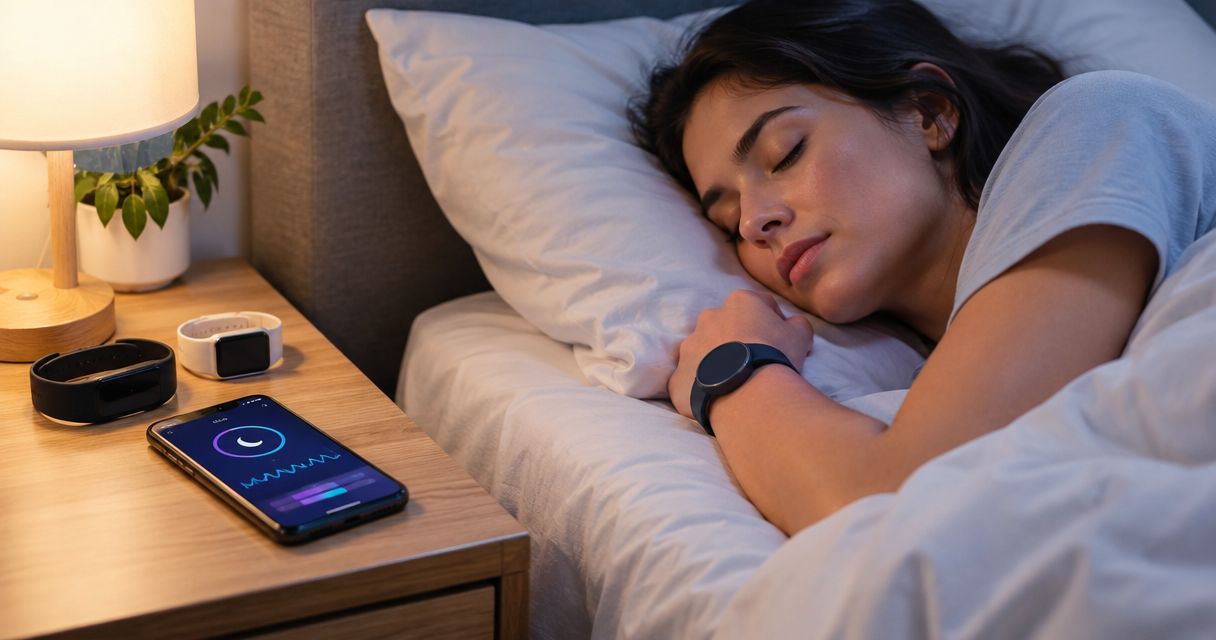
Best overall: Oura Ring. Best for iPhone users who also want a smartwatch: Apple Watch. Best for a straightforward fitness band: Fitbit Charge 6. This 2026 guide compares the best wearable sleep trackers by overnight comfort, useful sleep information, and the effort required to keep wearing them.
- Oura Ring leads the best wearable sleep trackers for adults who prefer a ring to a wrist device.
- Apple Watch suits iPhone users who want sleep tracking and daytime smartwatch features in one device.
- Fitbit Charge 6, Garmin Venu 3, and WHOOP serve different fitness and recovery priorities.
- Use sleep tracking to identify patterns, not to diagnose sleep disorders or chase perfect sleep scores.
Why this matters
A sleep tracker earns its place when its information helps you make a practical decision. A detailed dashboard accomplishes little if you never connect it to your bedtime, morning energy, or evening habits.
Restweft offers personal online sleep coaching for adults in the United States, with an emphasis on practical evening routines and tracking sleep patterns. That service addresses the behavior side of sleep; a wearable supplies observations, not a complete explanation of why you slept poorly.
Choose the device you can wear consistently, then use its trends to ask better questions about your routine. That is the buying principle behind this 2026 ranking, rather than the number of scores an app displays.
What makes the best wearable sleep trackers?
- Overnight comfort: A ring, watch, or band must remain tolerable while you sleep. Fit matters more than a long feature list.
- Useful sleep information: Sleep timing, estimated duration, and trends should be easy to find and understand.
- Charging practicality: A device cannot record a night spent on its charger. Consider how charging fits around your day.
- Phone compatibility: Check the exact device and phone requirements before choosing a tracker.
- Decision value: The information should help you review a habit or prepare a useful question for a clinician.
- Clear limits: Consumer sleep estimates are not equivalent to a clinical sleep study, regardless of how precise the dashboard looks.
Best wearable sleep trackers at a glance
The order below reflects distinct buying needs, not a claim that every device measures sleep equally well. For your 2026 shortlist, start with the form factor and phone ecosystem you can live with.
| Tracker | Best for | Standout feature | Key limitation |
|---|---|---|---|
| Oura Ring | Sleep tracking without a wrist device | Ring-based sleep and readiness tracking | Fit needs attention; no watch-style display |
| Apple Watch | iPhone users wanting an everyday smartwatch | Sleep tracking alongside broad smartwatch functions | Not an Android option; charging needs planning |
| Fitbit Charge 6 | A band rather than a full smartwatch | Sleep tracking in a fitness-band format | Small screen offers less room for reviewing information |
| Garmin Venu 3 | Exercise-focused users wanting sleep context | Sleep information alongside training and activity records | Broader feature set requires more setup and attention |
| WHOOP | Recovery-focused users who prefer no screen | Screen-free tracking centered on strain and recovery | Phone-based review; no on-device time display |
1. Oura Ring: best wearable sleep tracker for ring wearers
Oura Ring records sleep-related information from a device worn on your finger. Its app presents sleep and readiness information, making it an alternative to sleeping with a watch.
Oura Ring is the best overall choice here for adults who want sleep tracking without a wrist device. The recommendation rests on form factor and sleep-focused presentation, not a claim of clinical accuracy.
Oura Ring pros:
- Leaves your wrist free during sleep.
- Organizes sleep and readiness information in one app.
- Has no watch display to check during the night.
Oura Ring cons:
- Ring fit needs careful attention before committing.
- Does not replace a smartwatch for on-device messages or activity information.
Best for: Adults who dislike sleeping in a watch and want a sleep-focused companion app.
A ring is not automatically more comfortable than a band. Think about whether you already tolerate rings overnight and whether finger-worn jewelry suits your daily activities. Review the sizing guidance for the specific model rather than borrowing your usual jewelry size without checking.
Verdict: Buy Oura Ring if a ring is the form factor you will actually wear every night.
2. Apple Watch: best wearable sleep tracker for iPhone users
Apple Watch combines sleep tracking with everyday smartwatch functions. It suits someone who wants one wearable for daytime use and nighttime observations rather than a separate sleep-focused device.
Its strongest advantage in this comparison is practical: an existing Apple Watch user can start reviewing sleep without introducing another wearable. The trade-off is finding a charging routine that leaves the watch ready for bed.
Apple Watch pros:
- Combines sleep tracking with notifications, activity recording, and other smartwatch functions.
- Places sleep information within the Apple health ecosystem.
- Avoids adding a separate device if you already wear a compatible Apple Watch.
Apple Watch cons:
- Requires an iPhone rather than an Android phone.
- A wrist-worn screen and watch case do not suit every sleeper.
- Overnight wear requires deliberate charging habits.
Best for: iPhone users who want a general-purpose watch rather than a dedicated sleep tracker.
Check the sleep features supported by the particular watch and software version you intend to use. Apple Watch is a product family; a feature described for one model is not a promise about every model.
Verdict: Buy Apple Watch if smartwatch utility matters as much as overnight tracking.
3. Fitbit Charge 6: best wearable sleep tracker for band users
Fitbit Charge 6 combines fitness tracking and sleep tracking in a wristband. It occupies the middle ground between a ring without a display and a larger smartwatch.
Choose this format because you prefer a band, not because a smaller display guarantees simpler sleep information. You still need to understand what the app estimates and what action, if any, follows from the results.
Fitbit Charge 6 pros:
- Provides sleep and activity tracking in the same device.
- Uses a band format rather than a full-size watch design.
- Includes a display for checking information without always opening your phone.
Fitbit Charge 6 cons:
- The small display limits how much detail you can review on your wrist.
- A band still requires comfortable overnight fit and regular charging.
Best for: Adults who prefer a fitness band and want sleep information alongside daily activity.
For a 2026 purchase, review the current phone requirements and the exact sleep features included with the device and app. Separate the information you actually need from extras you will rarely use.
Verdict: Buy Fitbit Charge 6 if a fitness band is your preferred everyday format.
4. Garmin Venu 3: best wearable sleep tracker for exercise context
Garmin Venu 3 combines smartwatch and fitness functions with sleep information. Its role in this list is to place overnight observations beside a broader record of activity and exercise.
That context helps you ask whether a demanding day coincided with different sleep or morning energy. It does not establish that exercise caused the change.
Garmin Venu 3 pros:
- Brings sleep and exercise information into the same ecosystem.
- Offers an on-device display.
- Suits readers who want a fitness-oriented watch beyond bedtime.
Garmin Venu 3 cons:
- Broader functionality adds settings and information to manage.
- A watch case is unnecessary if you only want overnight observations.
Best for: Exercise-focused adults who want a watch for both daytime activity and sleep review.
Do not choose a training-oriented watch solely to obtain another morning score. Choose Garmin Venu 3 when you also want its daytime role.
Verdict: Buy Garmin Venu 3 if exercise tracking is central to your decision.
5. WHOOP: best wearable sleep tracker for screen-free recovery tracking
WHOOP is a screen-free wearable centered on sleep, strain, and recovery information reviewed through its app. It suits readers who want a recovery-oriented system rather than an on-wrist dashboard.
Screen-free does not mean attention-free. You still decide how often to open the app and how much weight to give its scores.
WHOOP pros:
- Keeps a display off your wrist.
- Groups sleep information with strain and recovery context.
- Separates wearing the device from reviewing its information.
WHOOP cons:
- Requires your phone to review detailed results.
- Does not provide an on-device clock.
- Recovery scores need interpretation rather than automatic obedience.
Best for: Adults who specifically want screen-free tracking and a recovery-centered app.
Verdict: Buy WHOOP if its recovery-focused approach matches how you plan to use your data.
How the ranking works
This 2026 ranking prioritizes overnight wearability, understandable information, charging practicality, compatibility, and a distinct use case. It is a buying-fit comparison, not a laboratory accuracy ranking.
Oura Ring takes the default slot for readers avoiding wristwear. Apple Watch, Fitbit Charge 6, Garmin Venu 3, and WHOOP each serve a different preference; none earns a recommendation simply by displaying more measurements.
Turn sleep data into a useful routine
A wearable records observations. Your next step is to connect those observations to something you can describe and, where appropriate, change.
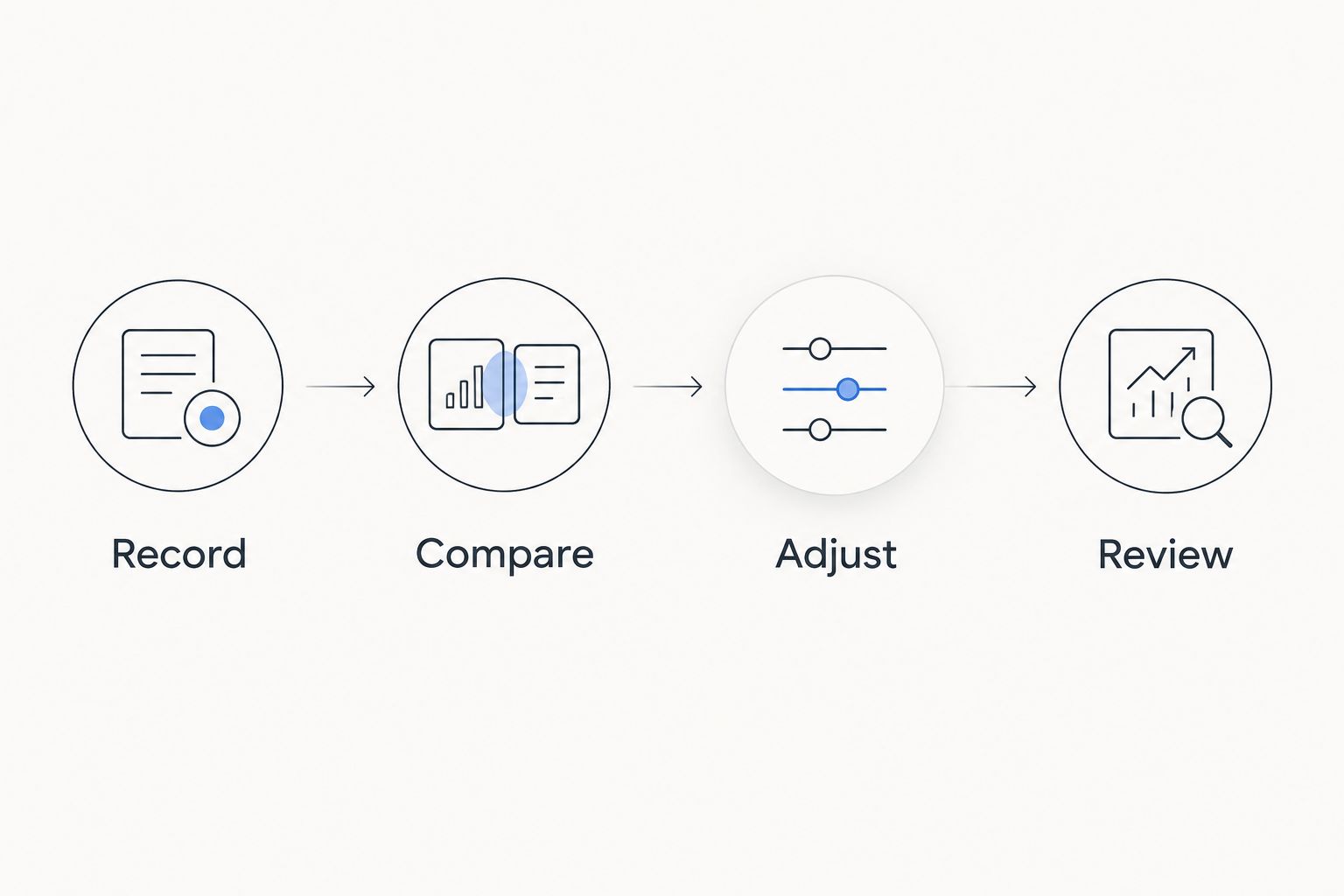
Use this review sequence:
- Record: Wear the tracker as directed and note bedtime, wake time, and how rested you feel.
- Compare: Look across several nights rather than treating one score as a verdict.
- Adjust: Choose one practical evening habit to change while keeping your notes.
- Review: Ask whether the routine is easier to follow and whether your daytime experience changed.
As a practical starting exercise, keep notes for 14 nights and set aside 10 minutes for each review. After the first 7 nights, identify a repeatable pattern worth examining. These are organizational suggestions, not thresholds for proving that a habit works or diagnosing a disorder.
Avoid changing bedtime, caffeine habits, exercise, and evening screen use simultaneously if your goal is to understand a particular change. A simple record is easier to interpret than a collection of unrelated experiments.
Restweft sleep coaching is best for U.S. adults seeking personal help with practical evening routines and tracking sleep patterns. Keep the roles separate: coaching supports habits, while medical evaluation addresses suspected sleep disorders.
Build a practical evening routine
Explore personal online sleep coaching for U.S. adults, focused on routines and sleep patterns.
Which wearable sleep tracker should you choose?
Choose Oura Ring as the default if you want sleep-focused tracking and prefer a ring. Choose Apple Watch for iPhone-based smartwatch use, Fitbit Charge 6 for a band, Garmin Venu 3 for exercise context, or WHOOP for screen-free recovery tracking.
If you already own a compatible wearable, begin there. A new device is not necessary just to start recording bedtime, wake time, and morning energy.
For 2026, make comfortable overnight use your first filter. The best dashboard cannot explain a night the device never recorded.
FAQ
What's the best wearable sleep tracker overall?
Oura Ring is the overall pick in this guide for adults who want sleep tracking without a wrist device. Apple Watch is the better fit when everyday smartwatch functions are equally important.
Is a sleep tracking ring better than a watch?
A sleep tracking ring is better when you prefer finger-worn tracking and dislike sleeping with a watch. A watch is better when you also want an on-device display and daytime smartwatch functions.
Can a wearable accurately measure my sleep stages?
A consumer wearable estimates sleep stages rather than measuring them in the same way as a clinical sleep study. Use stage estimates as supporting information, not as a diagnosis or a nightly performance target.
Should I buy a sleep tracker if I already have an Apple Watch?
Start with your existing compatible Apple Watch before buying another tracker. Consider a different format if overnight comfort or charging prevents consistent use.
Can a sleep tracker diagnose insomnia or sleep apnea?
A consumer sleep tracker does not replace clinical evaluation for insomnia or sleep apnea. Discuss persistent sleep difficulties, loud snoring, witnessed breathing pauses, or substantial daytime sleepiness with a healthcare professional.
What should I do if my sleep score looks bad but I feel fine?
Treat the score as one observation rather than a verdict on your health. Review the broader pattern and your daytime experience instead of changing your routine in response to one result.
Does Restweft replace a wearable sleep tracker?
Restweft provides personal online sleep coaching rather than a wearable device. Its focus is helping U.S. adults build practical evening routines and track sleep patterns.
One last thing
Decide what action a measurement would change before giving it your attention. If a nightly score does not help you review a habit, understand a pattern, or prepare a question for a clinician, you do not need to check it every morning.
Your tracker should support your sleep routine—not become another evening obligation.