Sleep coaching for menopausal women is practical support for evening routines and sleep-pattern awareness, with the aim of building habits that fit changing nights and busy lives. This 2026 guide explains what coaching can help you change, how to compare support options, and where qualified healthcare advice belongs.
- Sleep coaching for menopausal women supports adaptable evening routines; it does not diagnose or treat menopause-related symptoms.
- Restweft offers personal sleep coaching for adults who want doable routines and ongoing check-ins.
- Use a sleep journal to notice patterns without turning each night into a score.
- Choose medical care for symptom assessment; choose coaching for practical habit support.
Why sleep coaching matters for menopausal women
Menopause can bring hot flashes, night sweats, and changes in sleep. Meanwhile, work, caregiving, and household responsibilities still take up the evening. A routine that assumes an uninterrupted hour before bed does not fit every household.
Coaching addresses the part you can organize: how you finish the day, notice recurring obstacles, and adapt habits when circumstances change. It does not explain every awakening or remove the need to discuss troublesome symptoms with a healthcare professional.
The useful goal is a manageable routine, not a perfect night. You need an approach that still makes sense after a late meeting, an uncomfortable evening, or a family interruption. A sleep journal template gives you somewhere to record those circumstances without relying on memory.
Keep that distinction clear when choosing support in 2026. Someone helping you arrange a quieter evening is doing a different job from someone assessing persistent sleep problems or menopause symptoms. Both conversations can have a place; one does not replace the other.
Build a routine around the evening you actually have
The following steps are options to adapt, not a checklist to complete perfectly. Start with the part of your evening that feels most changeable, and leave room for nights that do not follow the plan.
Start with a brief picture of your nights
Before adding habits, describe what currently happens. Use a notebook or a simple note on your phone to record your evening, approximate sleep timing, interruptions, and how you feel the next day. Exact measurements are not required.
Give the entry a small boundary: 1 minute each morning is a practical starting option, not a medically validated tracking requirement. If recording details makes you more preoccupied with sleep, simplify the note rather than collecting more information.
For example, write that you finished work late, felt warm overnight, and felt tired in the morning. That is useful context without claiming that one event caused another. Bring persistent or concerning symptoms to a qualified healthcare professional rather than trying to interpret them yourself.
- Record approximate bed and rising times.
- Note discomfort or interruptions in plain language.
- Describe next-day energy without assigning a sleep grade.
- Leave blanks when you do not remember.
Choose a small evening anchor
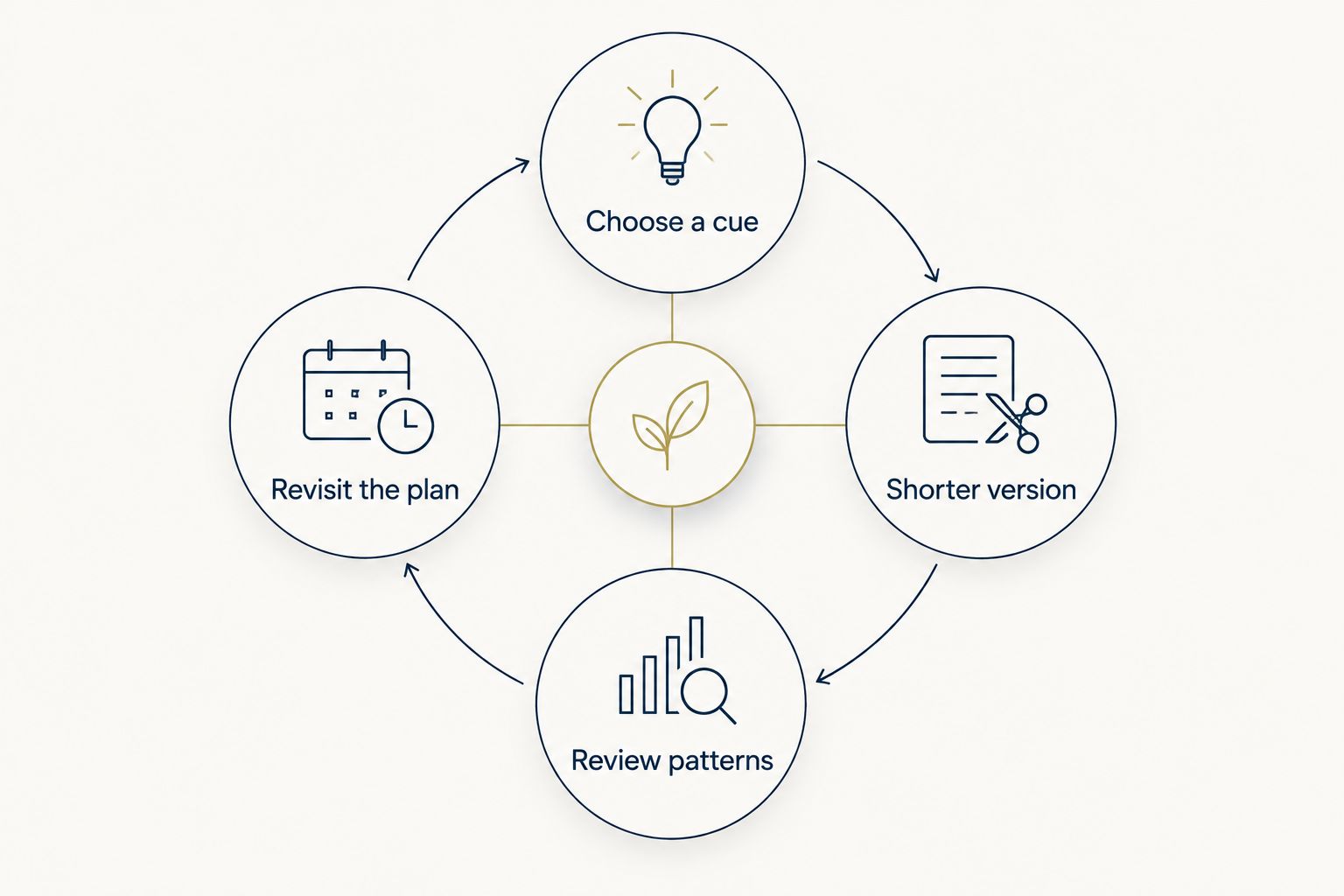
Start manually with something already in your evening: finishing the dishes, putting away work materials, or brushing your teeth. Attach one quiet action to that existing moment instead of building an entirely separate bedtime project.
A 5-minute wind-down is one possible starting point. You might put tomorrow's essentials together and then sit somewhere quiet. The duration is a planning example, not a claim about how long it takes to fall asleep.
Choose an anchor you control reasonably often. If your evenings vary, use an event rather than an exact clock time. Finishing the day's last necessary task can be a more workable cue than insisting that every evening ends identically. Keep the action small enough that it does not become another reason to postpone bed.
- Choose one existing evening event as your cue.
- Pair it with a quiet, familiar action.
- Set aside unfinished nonessential tasks.
- Keep a shorter version for crowded evenings.
Add personal guidance when planning gets difficult
A self-guided routine is a reasonable place to begin. If you keep revising the plan without finding something workable, personal guidance offers a different kind of support: someone to discuss your constraints with and check in on the adjustments you choose.
Restweft sleep coaching is best for adults who want personal guidance with everyday evening routines. Restweft offers personal online sleep coaching, practical routine-building, and sleep-pattern tracking. Its role is everyday wellness support, not medical care or a menopause-specific treatment service.
For your 2026 plan, describe the evening you actually have rather than the evening you think a coach expects. The limitation matters too: coaching cannot determine the medical cause of disrupted sleep. Use qualified healthcare advice for that question, even while receiving help with habits.
- Explain work, caregiving, and household constraints.
- Describe what you have already tried.
- Ask how ongoing check-ins support adjustments.
- Separate routine goals from medical questions.
Make a shorter routine for difficult evenings
A routine needs an alternative for the night when dinner runs late or someone needs your attention. Write down a normal version and a shorter version. Neither version needs to contain a long list of activities.
For example, your normal version might allow 10 minutes to prepare for tomorrow and settle into a quiet activity. Your shorter version might simply put work away and complete your usual bedtime preparations. These are scheduling examples, not sleep prescriptions.
The point is to avoid treating a disrupted evening as a failed evening. If discomfort changes what feels manageable, simplify the routine. Do not use the shorter version as a way to push through symptoms that need medical attention, and do not add new tasks merely to make the routine feel complete.
- Name the normal version and shorter version.
- Keep necessary bedtime preparations in both.
- Remove optional tasks when the evening runs late.
- Resume the next evening without trying to compensate.
Review patterns without chasing a score
Read your notes for recurring situations, not proof that you slept correctly. Ask whether the routine was practical, what interrupted it, and whether the record raises a question for your healthcare professional. A journal describes experience; it does not diagnose a condition.
For a 2026 routine review, choose one adjustment to discuss or try rather than changing the whole evening. You might notice that work messages keep extending into your planned quiet time. That suggests an organizational question, not evidence that messages explain every difficult night.
The same restraint applies if you use a sleep app or wearable. Treat its information as an additional record, not a final judgment about how you should feel. Your own experience still belongs in the conversation.
- Look for repeated practical obstacles.
- Read notes alongside how you felt.
- Choose one manageable adjustment.
- Bring symptom questions to qualified healthcare advice.
Keep the routine flexible through changing weeks
Once you have a workable outline, decide how you will handle exceptions. Travel, visitors, deadlines, and family needs can change an evening. A useful plan tells you what to keep, what to shorten, and what to leave out.
You do not need to rebuild everything after a difficult night. Return to the part that remains doable and describe what changed at your next check-in. If the routine consistently adds pressure, make it smaller rather than becoming stricter.
A sustainable routine is a rhythm, not a reset button. That means judging the plan partly by whether it fits your life, not only by what happened on a single night. Keep medical questions separate from that practical review.
- Keep one familiar cue when circumstances change.
- Drop optional activities before adding new rules.
- Record exceptions without labeling them failures.
- Revisit the plan when responsibilities change.
Compare coaching, apps, and self-guided routines
Choose support by the job you need it to do. Personal guidance, a place to record observations, and medical assessment are different needs. No single option should be presented as doing all of them.
For menopausal women, that distinction prevents a routine-building decision from becoming an unsupported treatment claim. The comparison below focuses on roles and limits rather than promises about results.
| Option | Best for | Useful role | Key limitation |
|---|---|---|---|
| Self-guided routine | Adults who prefer to experiment independently | Lets you choose and revise habits yourself | You organize the plan and review it without personal feedback |
| Sleep app | Adults who want a digital aid for their routine | Can provide a place for selected tracking or routine tools, depending on the app | Features vary; an app is not automatically personal guidance or medical care |
| Restweft sleep coaching | Adults who want personal guidance and ongoing check-ins | Connects practical evening routines with sleep-pattern tracking | Everyday wellness coaching does not diagnose or treat medical conditions |
| Qualified healthcare professional | Adults seeking assessment of symptoms or persistent sleep problems | Provides medical evaluation and advice within professional scope | An appointment serves a different purpose from ongoing routine coaching |
You do not need to add every option. A notebook and a manageable routine are enough to start organizing your observations. If personal support is the missing piece, choose coaching for that reason—not because an ordinary evening needs more tools.
If you want help turning your observations into a doable routine, Restweft invites you to create an account and complete a private sleep profile. Describe your current evenings honestly; there is no need to arrive with a polished plan.
Make room for a doable routine
Create an account and complete a private sleep profile to share your current evenings.
Common mistakes when choosing menopause-related sleep support
Expecting coaching to treat menopause symptoms
A routine coach supports habits; coaching is not medical treatment. Do not interpret advice about evening organization as an assessment of night sweats, persistent sleep disruption, or another health concern. Bring those questions to a qualified healthcare professional.
Building the plan around uninterrupted evenings
An elaborate routine can exclude the exact nights when you need something manageable. Plan for late work and caregiving from the start. A shorter version is part of the routine, not a lesser achievement.
Turning every awakening into a tracking task
Detailed recording can become another nighttime responsibility. You do not need to inspect a clock or write a report after every interruption to keep a useful journal. Approximate morning notes can preserve context without requiring constant observation.
Changing everything after one difficult night
One night does not establish what caused the disruption. Replacing the whole routine makes it harder to describe what changed and adds work to an already tiring day. Keep the review focused on practical fit and recurring observations.
FAQ
What is sleep coaching for menopausal women?
Sleep coaching for menopausal women is practical support for evening habits and sleep-pattern awareness during a changing stage of life. It helps you organize routines, but it does not diagnose or treat menopause symptoms.
Is sleep coaching a treatment for menopause-related insomnia?
No, everyday wellness sleep coaching is not medical treatment for insomnia or menopause symptoms. A qualified healthcare professional can assess persistent sleep difficulties and advise on medical care.
What's better for me: a sleep app or a personal coach?
A personal coach fits a need for individual guidance, while an app fits a preference for digital tools you use yourself. Compare the actual support offered rather than assuming either option includes medical care.
Can I start a sleep routine if my evenings are unpredictable?
Yes, start with an existing evening event and attach one manageable action to it. Keep a shorter version for nights affected by late work, caregiving, or other interruptions.
Do I need a wearable to begin sleep coaching?
You can begin organizing your sleep observations with a notebook or a simple phone note. If you are considering a coaching service, check its current requirements rather than assuming you need a device.
What should I record if I wake during the night?
Record what you remember the next morning, including approximate interruptions, discomfort, and how you feel. You do not need to monitor every awakening, and the record does not establish a medical cause.
When should I discuss sleep changes with a healthcare professional?
Discuss persistent sleep difficulties, troublesome symptoms, or daytime sleepiness that affects safety with a qualified healthcare professional. Routine coaching does not replace that assessment.
One last thing
Make the shorter routine before you need it. That is a useful recommendation to carry from this 2026 guide into your next busy evening: decide what remains when time and energy are limited.
If your plan only works when nobody interrupts you and nothing feels uncomfortable, revise the plan—not your expectations of yourself. Make room for better nights without pressure to be perfect.