A useful sleep hygiene checklist covers a workable sleep schedule, a quieter wind-down, a comfortable bedroom, and a simple way to notice patterns. Use this 2026 guide to choose small adjustments that fit your evenings—not to guarantee sleep or turn bedtime into another task you have to get right.
- Start your sleep hygiene checklist with one doable change, not a complete evening overhaul.
- Restweft offers personal sleep coaching for adults who want practical routines and ongoing check-ins.
- Use a sleep journal to notice patterns without treating each night as a pass-or-fail test.
- Everyday sleep habits support routines; they do not replace medical care.
What belongs on a flexible sleep hygiene checklist for adults?
Your checklist should help you prepare for rest while leaving room for work, caregiving, and evenings that run late. Start with these options, then keep the ones that address a real difficulty:
- Choose a workable wake-up time. Aim for a reasonably consistent rhythm that fits your responsibilities.
- Create a transition out of the day. Pick a quiet activity you can repeat; this wind-down routine for a busy evening can help you plan.
- Notice evening stimulation. Consider whether work messages, bright screens, or demanding tasks keep you engaged later than intended.
- Check bedroom comfort. Adjust light, noise, and temperature where you have control.
- Notice caffeine and alcohol timing. Record these alongside your sleep notes rather than assuming they have no effect.
- Leave a brief morning note. Capture what happened and how you feel without grading yourself.
Choose one starting point rather than treating the whole list as tonight's assignment. If your evenings already feel crowded, adding a complicated routine creates another obstacle. A checklist earns its place by making the next step easier to remember.
Why this matters
Sleep advice often arrives as a collection of rules with no room for an unfinished workday, a child who needs you, or a shared bedroom. You still need a way to make decisions when the ideal evening is unavailable. A flexible checklist gives you that structure without requiring identical nights.
Separate actions from outcomes. Putting your phone aside is an action you can choose; falling asleep on command is not. Judge the usefulness of a habit by whether it fits your life and supports a calmer transition, not by whether a single night went exactly as planned.
That distinction also keeps tracking in its proper place. Notes are there to help you understand your experience, not prove that you followed instructions perfectly.
Which approach fits the support you want?
You can use a paper checklist, a sleep app, or personal coaching to organize your habits. These approaches differ in how you record information and where the guidance comes from; none guarantees better sleep.
| Approach | Best for | What it offers | Limitation |
|---|---|---|---|
| Self-guided routine | Adults who prefer to make their own adjustments | A checklist or notebook you control | You choose what to change and interpret your own notes |
| Sleep app | Adults who prefer digital prompts or records | Features vary; review the app's current description | A digital record does not automatically explain your experience |
| Restweft personal sleep coaching | Adults who want personal guidance and ongoing check-ins | Help building practical evening routines and tracking sleep patterns | Everyday wellness coaching, not medical diagnosis or treatment |
Restweft personal sleep coaching is best for adults who want practical evening routines with personal guidance and ongoing check-ins. Choose a format you are comfortable returning to, rather than the one that produces the most information.
If you already keep useful notes and know what you want to adjust, a self-guided routine can remain simple. If deciding what to try feels harder than writing things down, personal guidance addresses a different need than another tracking tool.
Why your sleep hygiene checklist varies
Your routine should reflect the conditions you actually have. These factors help you decide which parts of the checklist deserve attention:
- Work timing: An evening shift or late meeting changes when you can begin winding down. Build around your actual finish time.
- Caregiving: Children, relatives, and other responsibilities can interrupt a routine. Keep a shorter version available.
- Shared space: You might not control every light or sound. Focus on adjustments you can make without requiring the whole household to change.
- Evening habits: Notice when caffeine, alcohol, work, or stimulating activities appear in your notes. Avoid changing everything together.
- Tracking preference: A notebook and a digital record require different kinds of effort. Use the format you find manageable.
- The support you want: Some adults want a reminder; others want a conversation about what to try next. Those are different needs.
The checklist is a set of options, not a test of discipline. Keep the items connected to something you want to understand or make easier.
A workable evening plan for 2026
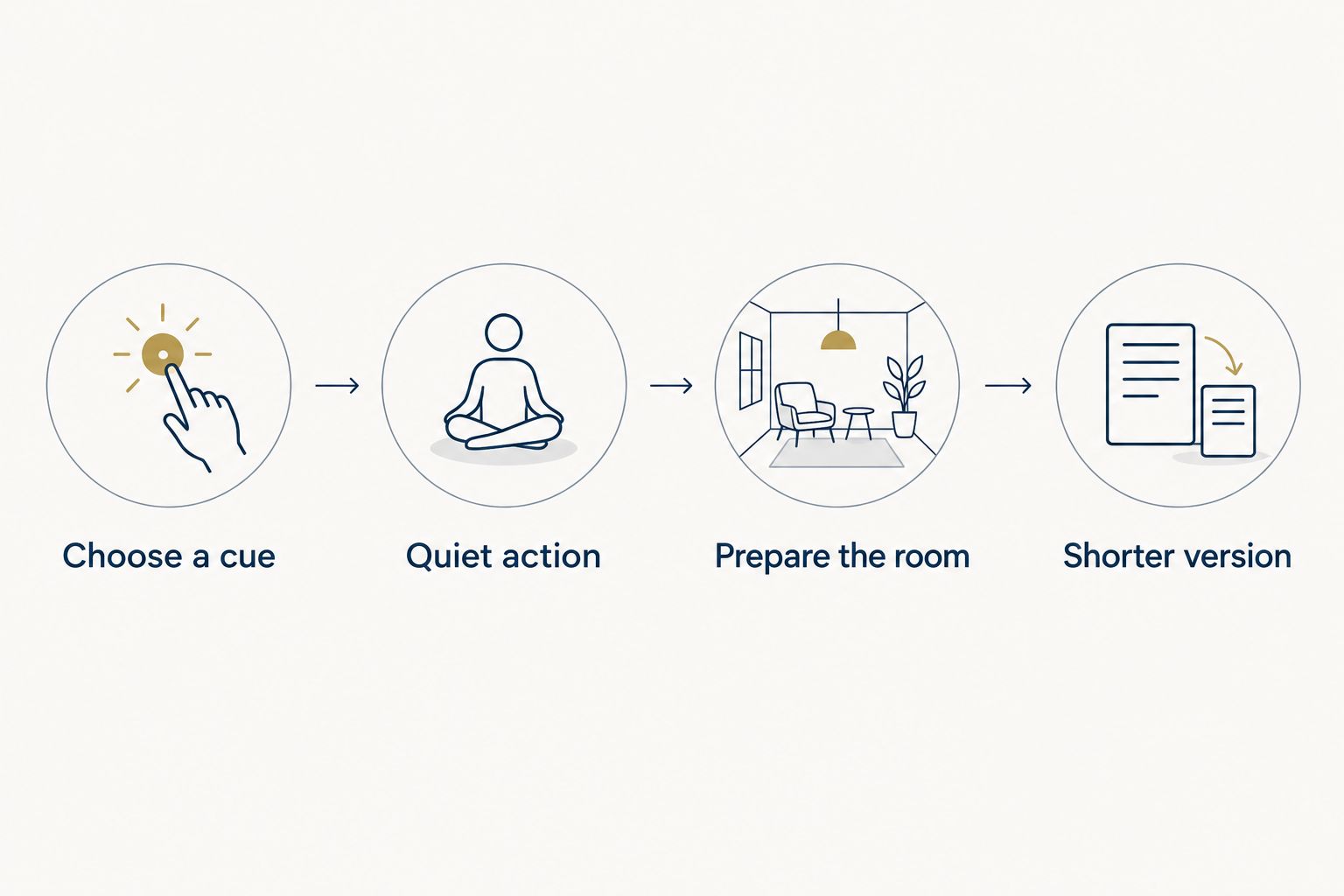
Build your routine around a recognizable transition rather than an elaborate sequence. The following steps are a planning example, not a required schedule or a prescribed amount of sleep preparation.
Choose a cue
Pick an event that already happens: finishing dinner cleanup, ending your last work task, or preparing clothes for tomorrow. Use that event as a reminder to shift into a quieter part of the evening.
A cue tied to real life is easier to place than an instruction to relax at a time your household rarely allows. If the cue regularly happens too late, choose a different one rather than blaming yourself.
Choose a quiet action
Try 5 minutes of an ordinary activity, such as reading a familiar book or sitting quietly away from work messages. That duration is an example of a small starting commitment, not a target proven to produce sleep.
Choose something you find restful. An activity that feels like another performance goal does not belong in your wind-down merely because it appears on someone else's checklist.
Prepare the room
Make the adjustments available to you: lower unnecessary light, address an avoidable noise, or change bedding if you feel uncomfortable. Start with a specific irritation rather than assuming you need new equipment.
Comfort is personal, and shared rooms involve compromise. Agreeing on a small change can be more practical than planning a bedroom setup you cannot maintain.
Keep a shorter version
For a late evening, allow 2 minutes to put work materials aside and prepare the space for bed. Again, this is an example—not a minimum effective dose or a promise about how quickly you will fall asleep.
The shorter version preserves a recognizable transition without asking you to finish the full routine. You do not need to add extra tasks tomorrow to make up for it.
Give the routine enough flexibility to survive an ordinary interruption. If an unexpected call ends your quiet activity, you can still prepare the room; the earlier interruption does not cancel the remaining options.
What does a flexible routine look like on a busy evening?
Imagine you close your laptop later than planned. You still need to prepare for tomorrow, and an extended wind-down would push bedtime further away. Instead of abandoning the evening or rushing through every checklist item, choose the shorter version.
Put tomorrow's first task on paper, move work materials out of your immediate view, and adjust the room for comfort. Leave the longer reading session for another evening. The aim is to make a clear transition, not complete a perfect sequence.
On a less crowded evening, you might choose 10 minutes of quiet reading instead. This is another planning example, not a requirement. A longer routine is not automatically a better routine if it feels burdensome or delays the bedtime you intended.
If you share your space, make the plan specific enough to discuss. Asking to lower a particular light is clearer than asking everyone to make the home restful. Keep the request focused on a practical change rather than judging another person's habits.
What should you track in your 2026 sleep notes?
Record enough information to make a useful conversation possible, but not so much that the record becomes the main event. You can begin with a short morning entry:
- Timing: When you went to bed and got up, using estimates when necessary.
- Evening context: A late work task, a quiet activity, caffeine, alcohol, or a disruption you remember.
- Your experience: Whether the night felt settled or interrupted and how you feel in the morning.
- Practical fit: Whether the routine was easy to start, awkward, or unrealistic.
Exact recall is not the goal. If you do not remember a time, leave an estimate or a plain description rather than checking the clock repeatedly to create a precise record.
Look for recurring observations before drawing conclusions. A late meeting and a difficult night appearing together does not establish that the meeting caused the difficulty. Your notes can identify something to discuss or adjust without becoming a diagnosis.
How do I use a sleep hygiene checklist without getting overwhelmed?
Start with one change you can explain in a short sentence. For example, decide to put work messages aside when you begin your quiet activity, rather than trying to redesign the whole evening.
Keep the remaining checklist items as options. If a step repeatedly feels difficult, make it smaller or choose another entry point instead of adding more reminders.
What if my evening routine gets interrupted?
Use the shorter version and leave the missed steps behind. A caregiving task, late arrival, or unexpected conversation does not mean the rest of the evening has failed.
Return to whichever action is still useful. You can prepare the room even when there is no time for reading, and you can resume your usual plan another night without compensating for the interruption.
When is personal guidance more useful than another checklist?
Personal guidance fits when you want help choosing adjustments and discussing how they worked. A longer list does not solve uncertainty about where to start or how to adapt a habit to your responsibilities.
If that support feels useful, you can create an account and complete a private sleep profile. Restweft sleep coaching connects practical routines with personal guidance and ongoing check-ins, without pressure to make every evening identical.
When a checklist is not the right next step
Everyday habits have limits. Sleep coaching is not medical care, and a checklist cannot determine why you are having persistent trouble sleeping or staying alert.
Speak with a qualified healthcare professional if sleep difficulties persist, interfere with daily functioning, or include concerning symptoms such as gasping during sleep. Do not use a wellness routine to postpone assessment of a problem that needs healthcare advice.
Keep safety separate from routine-building. If you feel too sleepy to drive safely, do not treat a checklist adjustment as the answer to that immediate risk. Get appropriate help rather than trying to push through.
FAQ
What's the best sleep hygiene checklist for a busy adult in 2026?
The best fit is a short, adaptable checklist covering your schedule, wind-down, bedroom comfort, and basic sleep notes. Begin with one manageable action rather than adopting every suggestion at once.
Do I have to follow every sleep hygiene tip each night?
No, you do not have to complete every item each night. Keep a shorter version for late evenings and choose the habits that address your actual difficulties.
How long should my wind-down routine take?
Your wind-down should fit the time and responsibilities you actually have. A 5-minute quiet activity is a planning example, not a required duration or a guarantee of better sleep.
Is a sleep app better than a paper sleep journal?
Neither format is automatically better for your needs. Choose paper if you prefer writing or a digital record if you prefer entering notes on a device, and review any app's current features and privacy information.
Can sleep hygiene cure insomnia?
A sleep hygiene checklist is not a cure or a substitute for medical assessment. Speak with a qualified healthcare professional about persistent sleep difficulties rather than relying on wellness habits alone.
Can I use a sleep checklist if I work different shifts?
You can adapt a checklist around changing shifts rather than forcing the same clock times every day. Focus on the transition available around your work schedule, and seek healthcare advice if sleepiness affects safety.
What does Restweft help with?
Restweft offers personal online sleep coaching for adults who want practical evening routines and help tracking sleep patterns. It provides everyday wellness guidance and ongoing check-ins, not diagnosis, medical treatment, or guaranteed results.
One last thing
Before adding another habit, remove an instruction you keep avoiding because it does not fit your evening. Replace it with something smaller and more specific, such as putting tomorrow's task on paper instead of completing an elaborate planning exercise.
Keep your 2026 checklist somewhere easy to find, but give yourself permission to revise it. A useful routine is a rhythm, not a reset button: it gives you a familiar place to return without asking you to erase the evening you actually had.