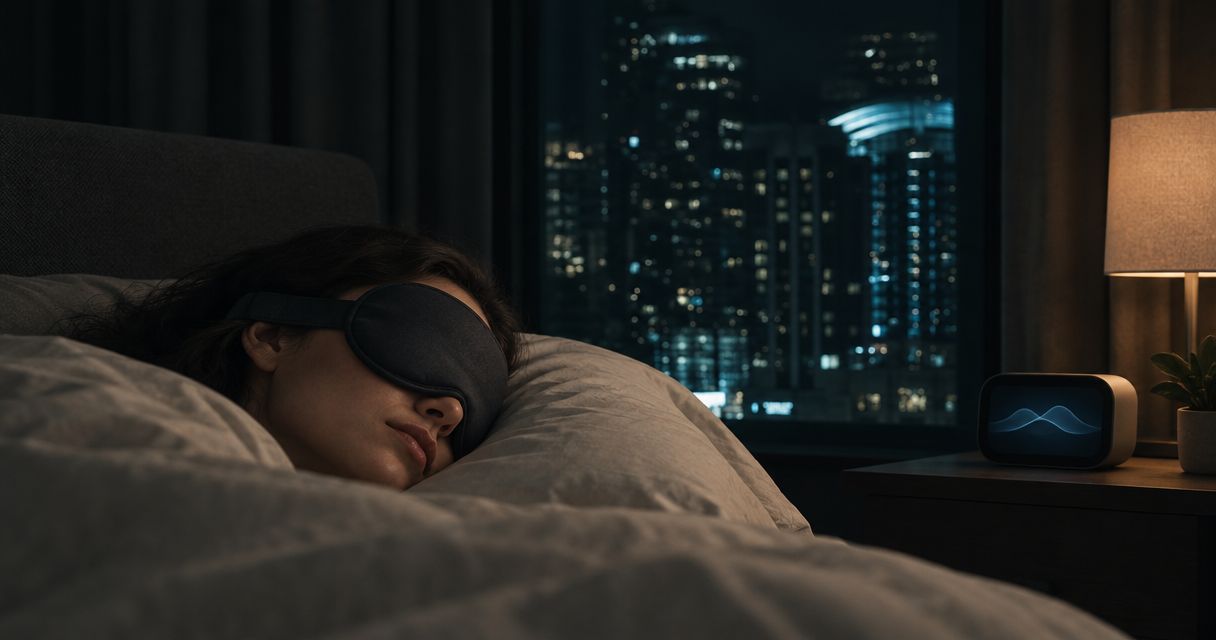
Best overall starting point: a contoured sleep mask with eye clearance. Best for side sleeping: a low-profile mask. Best for a simple routine: a plain flat mask. This 2026 guide compares the best sleep masks for light sleepers by design, so you can choose around light gaps, pillow contact, and comfort—not an unsupported brand ranking.
- The best sleep masks for light sleepers fit without light gaps or uncomfortable pressure.
- Start with a contoured mask for eye clearance; choose low-profile construction when pillow contact is the bigger concern.
- An adjustable wrap suits coverage adjustments; a removable-cover design suits readers who prioritize a washable contact layer.
- Restweft offers personal sleep coaching for adults who want help fitting practical habits into busy evenings.
Why this matters
A sleep mask addresses light reaching your eyes. It does not address every reason you wake up, and wearing one is not a treatment for a sleep condition. Start by asking whether unwanted light is actually part of your evening or morning experience.
Your choice also needs to fit the life you actually live. If you dislike straps, sleep on your side, or regularly move between rooms, those details belong in the decision before fabric descriptions do.
Restweft personal sleep coaching is best for adults who want guidance building a manageable evening routine. A mask is one possible tool within that routine, not a requirement for better nights.
You can explore Restweft if you want personal guidance and ongoing check-ins alongside practical changes. Coaching supports everyday wellness; it is not medical care.
What makes the best sleep masks for light sleepers?
For this 2026 guide, the useful question is not which mask sounds most impressive. It is which design solves your particular light problem without introducing a comfort problem.
- Light fit: Check the bridge of your nose, lower edges, and sides for gaps while lying down.
- Eye clearance: Decide whether you prefer fabric resting near your eyelids or space around them.
- Pillow compatibility: Notice whether your pillow pushes the mask sideways or presses its edges into your face.
- Strap comfort: Check where the adjustment hardware sits and whether the strap catches your hair.
- Care requirements: Read the actual cleaning instructions rather than assuming every fabric or insert tolerates the same washing method.
- Routine fit: Choose something you can comfortably put on, remove, and care for without making bedtime another task list.
A dark fabric alone does not establish a good fit. Even an opaque mask leaves an opening when its shape does not follow your face.
Sleep mask designs at a glance
These are design categories, not tested product winners. For your 2026 shortlist, check each individual mask's construction and care instructions; products within the same category differ.
| Mask design | Best for | Standout feature | Key limitation |
|---|---|---|---|
| Contoured mask | Space around the eyes | Shaped eye cavities | Raised edges need checking against your pillow |
| Low-profile mask | Side sleeping | Less material between face and pillow | A slim shape does not guarantee eye clearance |
| Adjustable wrap mask | Fine-tuning coverage | A wraparound closure | More fabric touches your head |
| Plain flat mask | Keeping bedtime simple | Uncomplicated construction | Fabric sits against the eye area |
| Removable-cover mask | Separating the contact layer for cleaning | Detachable outer cover | Cover and insert can require different care |
1. Contoured mask: best sleep mask for eye clearance
A contoured mask has shaped areas around the eyes rather than a completely flat front. Start here if you dislike fabric resting directly against your eyelids, but check the actual depth and shape rather than relying on the word contoured.
The important trade-off is between clearance and bulk. A cavity that feels comfortable while sitting upright still needs checking when your cheek meets the pillow.
Contoured mask pros:
- The shaped construction provides an option other than flat fabric against the eyelids.
- You can assess eye clearance separately from strap tightness.
- Different cavity shapes give you a specific fit feature to compare.
Contoured mask cons:
- Raised edges can meet your pillow when you turn sideways.
- The nose opening still needs checking for light gaps.
- A deeper shape does not automatically mean a more comfortable fit.
Best for: You want space around your eyes and are willing to check how the mask behaves in your usual sleeping position.
Try closing and gently opening your eyes with the mask on. If the material rubs or you feel uncomfortable pressure, reassess the fit rather than tightening it further.
Verdict: Buy a contoured design for eye clearance only when its edges also feel comfortable against your pillow.
2. Low-profile mask: best sleep mask for side sleeping
A low-profile mask keeps its construction relatively close to your face. It belongs on your shortlist when a thicker mask presses against the pillow or shifts as you settle onto your side.
Low profile describes shape, not a standardized level of comfort. Look at seams, strap hardware, and the parts that sit between your cheek and pillow.
Low-profile mask pros:
- A slimmer shape gives you less bulk to accommodate at the pillow.
- Its edges are straightforward to inspect while lying on either side.
- It offers an alternative when raised eye cups feel intrusive.
Low-profile mask cons:
- A thin design can still press against your eyelids.
- Seams or fasteners can remain uncomfortable despite a slim front.
- Light gaps still depend on your face and the individual mask.
Best for: You usually settle on your side and find pillow contact more distracting than fabric near your eyes.
Use your normal pillow during a fit check. Testing only while standing misses the pressure and movement that matter when you lie down.
Verdict: Buy a low-profile design when it stays comfortable on your side without needing an overly tight strap.
3. Adjustable wrap mask: best sleep mask for coverage adjustments
An adjustable wrap mask uses a broader wraparound closure rather than relying only on a narrow strap. Consider this design if you want to adjust how the mask sits around your head and face.
More coverage is not a guarantee of less light leakage. Your nose, the edges, and the closure position still determine whether the fit works for you.
Adjustable wrap mask pros:
- The closure gives you a place to adjust the fit.
- Broader coverage offers an alternative to a narrow elastic strap.
- You can check the wrap position against your preferred sleeping posture.
Adjustable wrap mask cons:
- More fabric touches your head, which is a drawback if you dislike that sensation.
- The closure can sit where your head meets the pillow.
- Extra coverage does not resolve a poorly shaped nose opening.
Best for: You want to fine-tune coverage and do not mind fabric around more of your head.
Set the closure gently, then turn into your usual position. If comfort depends on pulling it tightly, treat that as a fit problem rather than a reason to tolerate pressure.
Verdict: Buy an adjustable wrap for coverage flexibility; skip it if the extra fabric itself feels distracting.
4. Plain flat mask: best sleep mask for a minimal routine
A plain flat mask uses a simple panel across the eye area. Choose it when you want uncomplicated construction and already know that fabric near your eyelids does not bother you.
Do not confuse simplicity with universal comfort. The edge shape, strap, and fabric feel still deserve attention, even when there are fewer parts to inspect.
Plain flat mask pros:
- The construction is easy to understand and inspect.
- There are no shaped eye cavities to position.
- It suits a routine that favors fewer adjustments.
Plain flat mask cons:
- Fabric rests against the eye area.
- A flat shape does not necessarily follow the bridge of your nose.
- Strap tension can change how strongly the panel presses against your face.
Best for: You prefer a simple bedtime tool and are comfortable with direct fabric contact.
Feel the seams and edges before focusing on the material name. A pleasant fabric does not cancel out an uncomfortable seam in the wrong place.
Verdict: Buy a plain flat design for simplicity; skip it if eyelid contact already bothers you.
5. Removable-cover mask: best sleep mask for a separate cleaning layer
A removable-cover mask lets you detach an outer contact layer from the rest of the mask. Consider this construction if separating that layer for cleaning is important to your routine.
Check the care instructions for both pieces. A removable cover does not establish that the insert is washable, or that either part belongs in a washing machine.
Removable-cover mask pros:
- The contact layer separates from the main construction.
- You can inspect the cover independently for wear or residue.
- The design makes cleaning requirements a clear part of your buying decision.
Removable-cover mask cons:
- Removing and replacing the cover adds a care step.
- Cover seams or closures still need a comfort check.
- The cover and insert can require different handling.
Best for: You specifically want a detachable contact layer and are comfortable following separate care instructions.
Check how the cover goes back on. If reassembly feels fiddly, choose a simpler design with care instructions you can realistically follow.
Verdict: Buy a removable-cover design when the cleaning arrangement fits your habits, not just because it sounds convenient.
How the designs are ranked
This 2026 ranking prioritizes eye clearance first, then side-sleeping fit, adjustable coverage, simplicity, and a detachable cleaning layer. It compares construction choices rather than claiming hands-on product testing or measured light-blocking results.
Your personal order can differ. If pillow pressure is your main frustration, move low-profile construction ahead of contoured construction. If you dislike fabric around your head, move wrap designs off your shortlist entirely.
Check the fit without turning bedtime into a project
Give yourself a 5-minute fit check before you intend to sleep. That is a suggested decision window, not a performance standard or a promise about how quickly you will adjust.
- Check light. Lie down in your usual position and notice gaps around the nose and edges.
- Check comfort. Close your eyes, relax your face, and notice pressure, rubbing, seams, or pulling.
- Turn sideways. Move onto each side you normally use and check whether the pillow shifts the mask.
- Adjust gently. Change the position or closure without using tightness to force a poor shape to fit.
- Choose freely. Keep the mask as an option, or leave it off if it becomes another distraction.
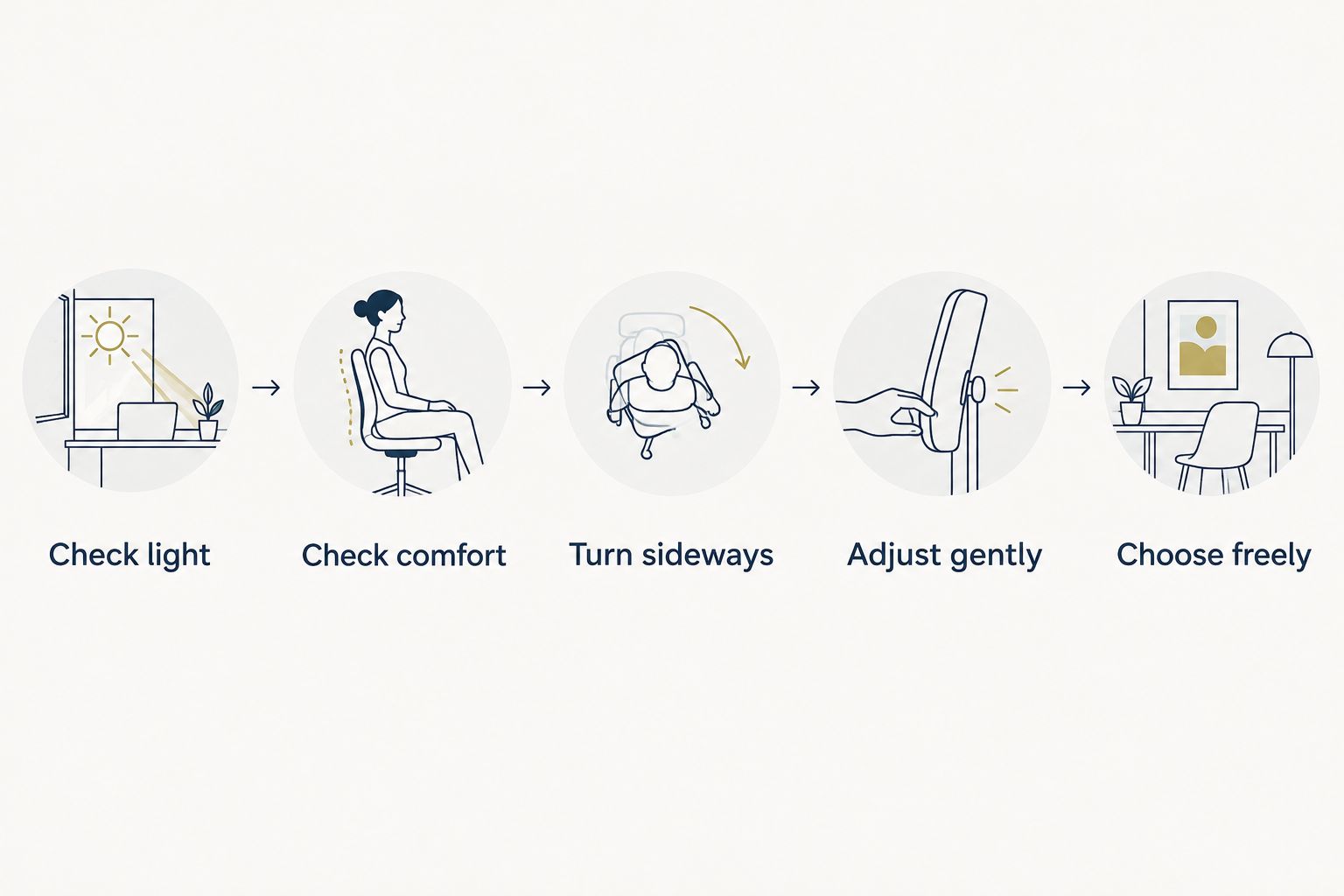
If the mask is comfortable, you could note your experience across 3 evenings, making 1 adjustment at a time. These are optional observation prompts, not a test you need to pass. Stop sooner if the mask causes discomfort.
Keep the rest of bedtime familiar. A wind-down routine for busy evenings can help you place the mask alongside existing habits rather than building your whole evening around it.
Which sleep mask should you choose?
For an undecided reader in 2026, start by comparing contoured and low-profile designs. Choose contoured construction when eye clearance matters most; choose low-profile construction when pillow contact is the bigger issue.
Restweft personal sleep coaching puts that choice in context: practical routines, personal guidance, and ongoing check-ins, without pressure to make every evening perfect. If you want that support, create an account and complete a private sleep profile.
Make room for better nights
Start with a private sleep profile and explore personal guidance for a routine that fits your evenings.
FAQ
What's the best sleep mask for a light sleeper?
The best sleep mask for a light sleeper fits without unwanted light gaps or uncomfortable pressure. Start with contoured construction for eye clearance or low-profile construction when pillow contact is your main concern.
Is a contoured sleep mask better than a flat mask?
A contoured sleep mask is the more relevant design when you want space around your eyes. A flat mask suits readers who prefer simpler construction and do not mind fabric touching the eye area.
What sleep mask should I choose if I sleep on my side?
Start by checking a low-profile mask against your usual pillow. Pay attention to seams, adjustment hardware, and whether the pillow pushes the mask out of position.
Why does light get in around the nose of my sleep mask?
Light enters when the mask leaves a gap around the bridge or sides of your nose. Reposition the mask gently, and choose a different shape if closing the gap requires uncomfortable tightness.
How tight should a sleep mask feel?
A sleep mask should feel secure without uncomfortable pressure or pulling. If tightening is the only way to keep it positioned, reassess the shape and closure rather than accepting discomfort.
Can I wash any sleep mask in the washing machine?
Follow the individual mask's care instructions rather than assuming it is machine washable. Removable covers and internal inserts can have different cleaning requirements.
Will a sleep mask fix my sleep problems?
A sleep mask addresses light reaching your eyes; it is not a treatment for sleep conditions. Speak with a qualified healthcare professional about persistent sleep difficulties or symptoms that concern you.
One last thing
The most useful observation is sometimes that you do not enjoy wearing a mask. You can leave it out of your routine without treating that decision as a setback.
For your 2026 routine, choose the smallest change that feels workable. Better nights call for a rhythm, not a reset button.