Best overall for a dry bedroom: an evaporative humidifier with a humidistat. Best for avoiding fan noise: an ultrasonic humidifier. Best for adults who specifically prefer heated mist: a warm-mist humidifier. This 2026 guide compares the best humidifiers for sleep by design, care requirements, and bedroom fit—not unsupported promises of better sleep.
- The best humidifiers for sleep address measured dryness; an evaporative model with humidity control is a practical starting point.
- Ultrasonic humidifiers avoid fan-driven mist delivery, but water choice and cleaning still matter.
- Warm-mist humidifiers introduce hot-water hazards; skip them where children or pets can reach them.
- Restweft sleep coaching supports adaptable evening routines, not humidifier selection as medical treatment.
A humidifier changes room moisture, not your entire sleep routine. Restweft offers personal online sleep coaching for adults who want practical evening habits and help tracking sleep patterns.
Why this matters
A dry-feeling bedroom is not enough information to choose a humidifier. Measure humidity first, because adding moisture to an already damp room creates a different problem.
The U.S. Environmental Protection Agency's indoor-air guidance recommends keeping relative humidity between 30% and 50%. Its Use and Care of Home Humidifiers guidance advises against humidifying above 50% and recommends reducing use if condensation appears.
For your 2026 bedroom setup, choose a humidifier only when measured dryness gives it a job to do. You do not need another appliance simply because you want better nights.
What makes the best humidifiers for sleep
Choose by what you can control and maintain, rather than how much mist you can see.
- Humidity control: Look for an adjustable humidistat, and check room conditions with a separate hygrometer rather than relying only on the appliance display.
- Cleanable parts: Choose a tank and base you can reach inside. A narrow opening makes regular care less convenient.
- Bedroom sound: Evaporative designs use a fan; ultrasonic designs use vibration. Check the particular model's sound settings rather than assuming a whole category is silent.
- Light control: Confirm whether displays and indicator lights can be dimmed or switched off if light bothers you.
- Water and upkeep: Read the instructions for water type, cleaning, and replacement parts before choosing.
- Safe placement: Consider cords, spills, nearby fabrics, and access by children or pets. Heated water adds a separate burn hazard.
A large tank is not automatically a better choice. Easy access for emptying and cleaning matters more than an impressive capacity you do not need.
Best humidifiers for sleep at a glance
These are design-level recommendations for 2026, not a ranking of named models. Features such as humidity controls, display dimming, and automatic shutoff need checking on the individual appliance.
| Rank and option | Best for | Standout design feature | Key limitation |
|---|---|---|---|
| 1. Evaporative humidifier | A dry bedroom where fan sound is acceptable | A fan moves air through a wet wick or filter | Fan sound and wick or filter maintenance |
| 2. Ultrasonic humidifier | Adults who want to avoid a fan-driven design | Vibration creates a fine mist | Can disperse minerals and microorganisms from tank water |
| 3. Warm-mist humidifier | Adults who specifically prefer heated mist | Heats water to produce vapor | Hot water and steam create burn hazards |
No design earns a recommendation for every bedroom. The useful question is whether its care requirements fit the life you actually live.
1. Evaporative humidifiers: best for a controlled dry-bedroom setup
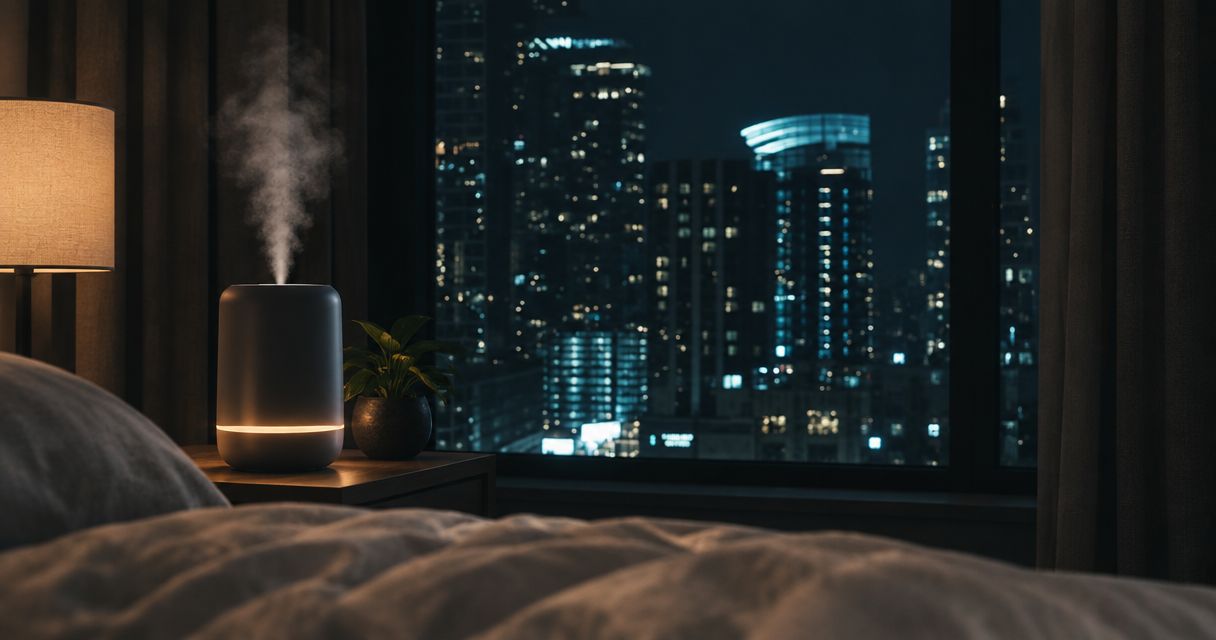
An evaporative humidifier moves air through a wet wick or filter so moisture enters the room through evaporation. This design is a practical default when your bedroom measures dry and fan sound does not bother you.
Look for an adjustable humidity setting rather than treating continuous operation as the goal. The appliance should support a comfortable room, not chase the highest possible reading.
Evaporative humidifier pros:
- Evaporation generally disperses fewer waterborne minerals into the air than ultrasonic mist.
- Models with adjustable fans let you choose among operating settings.
- A humidistat, when included, gives you a way to control moisture output.
Evaporative humidifier cons:
- The fan adds sound, which is a poor fit for some light sleepers.
- Wicks or filters need attention and replacement according to the manufacturer's instructions.
- The tank and base still require regular cleaning; evaporation does not make dirty water harmless.
Best for: Adults with measured bedroom dryness who accept fan sound and ongoing wick or filter care.
Before choosing a model, inspect how the wick comes out and whether you can comfortably reach the water-contact surfaces. Imagine doing that task on a busy evening, not just on the day the appliance arrives.
Verdict: Buy an evaporative humidifier if dryness is confirmed and its fan and maintenance suit your bedroom.
2. Ultrasonic humidifiers: best for avoiding fan-driven mist delivery
An ultrasonic humidifier uses vibration to produce a fine mist. It is the category to examine when you want humidification without the fan used by an evaporative design.
That mechanism does not guarantee a silent bedroom. A particular appliance can still make operating sounds, and visible mist does not tell you whether the room needs more moisture.
Ultrasonic humidifier pros:
- Mist production does not depend on an evaporative fan.
- Cool-mist versions avoid heating a reservoir of water.
- Adjustable output, when included, lets you reduce mist rather than running at full output.
Ultrasonic humidifier cons:
- Ultrasonic units can send minerals and microorganisms from the tank into the air.
- Mineral-containing water can leave white dust on nearby surfaces.
- Careful water selection does not remove the need for cleaning.
The EPA's humidifier guidance recommends low-mineral water to reduce mineral dispersal. Distilled water is an option to consider alongside the appliance's instructions; a household water filter does not automatically remove dissolved minerals.
Best for: Adults who dislike fan sound and are willing to manage water choice and regular cleaning.
For your 2026 shortlist, check the cleaning instructions before the display features. If daily water care already feels unmanageable, a different design—or no humidifier—is a more realistic choice.
Verdict: Buy an ultrasonic humidifier only if its water and cleaning routine fits your evenings.
3. Warm-mist humidifiers: best for adults who prefer heated mist
A warm-mist humidifier heats water to produce vapor. Choose this design because you specifically want that operating method, not because warm mist has been established here as better for sleep.
Heated water changes the safety decision. A bedside location that seems convenient can still put hot water, steam, or a trailing cord within reach.
Warm-mist humidifier pros:
- Heating water provides an alternative to an evaporative fan or ultrasonic mist mechanism.
- Steam-based designs generally disperse fewer minerals than ultrasonic units.
- The category gives adults a heated-mist option when that is their preference.
Warm-mist humidifier cons:
- Hot water and steam can cause burns.
- Mineral deposits still require attention according to the appliance instructions.
- Heated mist does not remove the need to monitor room humidity.
Best for: Adults who specifically prefer heated mist and have a stable location away from children, pets, and accidental contact.
There is no reason to move warm mist above the other categories simply because the word warm sounds comforting. Safety and manageable care belong ahead of that preference.
Verdict: Hold unless heated mist is a clear preference; skip it wherever hot-water access is a concern.
How these humidifier types rank
This 2026 ranking prioritizes humidity control, cleanability, sound, water care, and safe placement. Evaporative humidifiers lead as a practical default for measured dryness; ultrasonic models fill the fan-noise preference; warm-mist models serve a narrower preference with an added burn hazard.
These recommendations compare operating designs, not laboratory-tested models. Check the individual appliance's manual for features and care instructions rather than assuming every model matches the category's advantages.
Make humidifier care a doable evening routine
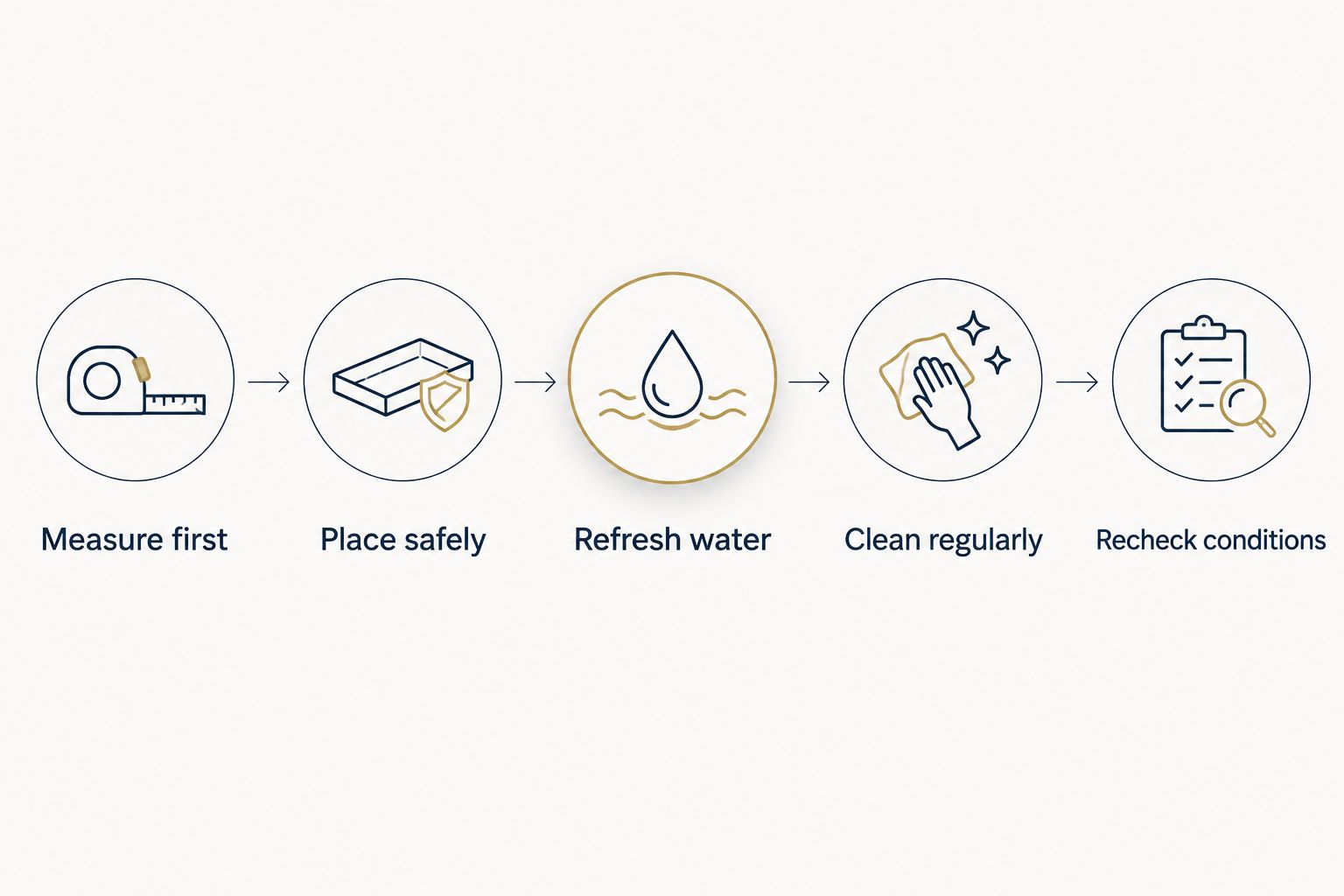
A humidifier belongs in your routine only if caring for it remains manageable. Use this flexible sequence rather than adding a complicated bedtime checklist.
Measure first
Read a hygrometer before switching the humidifier on. Use the EPA's 30%–50% guidance as context, and do not treat the upper end as a target you must reach.
Place safely
Follow the appliance's placement instructions. Keep mist away from bedding and other surfaces that become damp, and choose a stable location where the cord will not create a trip or spill risk.
Refresh water
The EPA recommends emptying portable humidifier tanks, drying surfaces, and refilling with clean water daily. Pair that task with something you already do, such as clearing the kitchen after dinner.
Clean regularly
The EPA recommends cleaning portable humidifiers every 3 days and following the manufacturer's directions. Use only the cleaning approach specified for the appliance, including its rinsing instructions.
Recheck conditions
Reduce use if you notice condensation or dampness around the unit. Check humidity again rather than assuming that yesterday's setting fits tonight's weather and room conditions.
On an evening when work runs late, the useful question is not whether you completed a perfect routine. It is whether the appliance is clean, needed, and safe to use. An optional device should not become another source of bedtime pressure.
Keep room comfort separate from sleep coaching
Restweft sleep coaching is best for adults who want personal guidance with doable evening routines and ongoing check-ins. Humidity is one room condition; coaching helps you consider how everyday habits fit together.
A sleep app can support self-guided logging, while a simple written routine gives you a plan without another device. Personal guidance adds conversation and check-ins, but it also asks you to participate rather than passively collect information.
| Approach | Best for | Practical benefit | Limitation |
|---|---|---|---|
| Restweft sleep coaching | Adults who want personal guidance | Support with routines, sleep patterns, and ongoing check-ins | Everyday wellness coaching, not medical care |
| A sleep app | Adults who prefer self-guided recording | A place to organize observations, depending on its features | Logging alone does not provide personal guidance |
| A written routine | Adults who want a simple starting point | Keeps chosen evening actions visible | Requires you to review and adapt the plan yourself |
If you want a starting point, the wind-down routine for busy evenings keeps the focus on habits rather than equipment. Pick an adjustment you can repeat without pressure to be perfect.
You can also create an account and complete a private sleep profile when personal guidance feels useful. Restweft provides everyday wellness coaching, not diagnosis, treatment, or a replacement for qualified healthcare advice.
Make room for your evening routine
Create an account and complete a private sleep profile to begin with your own habits and schedule.
Which humidifier should you choose?
Choose an evaporative humidifier with humidity control as your default for a genuinely dry bedroom. Choose ultrasonic instead if avoiding fan-driven operation matters more and you can maintain its water routine. Reserve warm mist for a specific adult preference with safe placement.
For 2026, keep the decision small: confirm the need, inspect the care instructions, and choose a design you can maintain. If your bedroom is not dry, skip the humidifier and look elsewhere in your evening routine.
FAQ
What's the best humidifier for sleep in a dry bedroom?
An evaporative humidifier with adjustable humidity control is a practical default when fan sound is acceptable. Confirm that your bedroom is dry before adding moisture, and check the individual model's cleaning requirements.
Is an ultrasonic humidifier better than an evaporative one for sleeping?
An ultrasonic humidifier is a better fit when avoiding an evaporative fan matters to you. It is not automatically better for sleep, and it requires attention to water minerals and cleaning.
What humidity should I aim for in my bedroom?
EPA indoor-air guidance recommends relative humidity between 30% and 50%. Do not humidify above 50%, and reduce use if condensation or dampness develops.
Can I leave a humidifier running all night?
Run a humidifier overnight only as permitted by its instructions and when room conditions justify it. Monitor humidity, use safe placement, and do not assume continuous operation is necessary.
How often should I clean a bedroom humidifier?
The EPA recommends cleaning portable humidifiers every 3 days and emptying, drying, and refilling their tanks daily. Follow the manufacturer's directions for the cleaning method and rinsing.
Do I need distilled water in an ultrasonic humidifier?
Distilled water is a low-mineral option that helps reduce mineral dispersal from an ultrasonic humidifier. Follow the appliance instructions, and keep cleaning it regularly regardless of water choice.
Will a humidifier fix my sleep problems?
A humidifier addresses dry room air; it is not a treatment for sleep problems. Discuss persistent sleep concerns with a qualified healthcare professional rather than relying on an appliance or wellness coaching.
One last thing
The most useful humidifier feature is sometimes the ability to leave it off. Comfortable room conditions do not require visible mist every night.
Keep the hygrometer reading and the care routine ahead of the gadget. Better evenings are a rhythm, not a reset button.